
Staying Overnight in the Marshes: Reed-House (Mudhif) Guesthouses
A day trip to the Mesopotamian Marshes gives you a few hours on the water. An overnight stay gives you something different: the hush before Fajr (currently 03:25 in Basra), birds working the reed beds at first light (sunrise 04:59), the smell of tea on a reed-mat floor, and the slow rhythm of a way of life that has existed here for thousands of years. If you can accept very basic facilities and a genuine cultural encounter, the overnight is worth it.
Why Stay Over Instead of Doing a Day Trip
The marshes change dramatically between midday and the margins of the day. Most day-trippers arrive mid-morning, when the light is harsh and wildlife has retreated into cover. As an overnight guest you wake inside the wetland itself: egrets and herons move at first light, water buffalo wade out of reed channels, and the landscape is briefly cool before the heat builds.
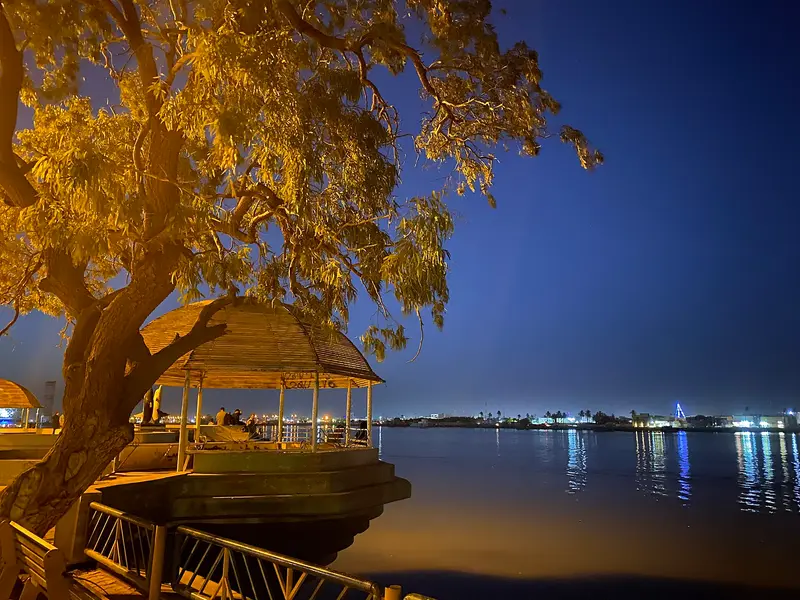
Evening brings a second window. After Maghrib (18:51 today), the sky reflects off the water and the community settles into its evening routine — cooking, conversation, the call to prayer echoing across open water. This is the part no day trip reaches.
For context on current conditions: July highs in Basra run around 46–50 °C (the current 7-day forecast sits between 46.4 °C and 50.5 °C). Inside a traditional reed structure, natural ventilation and proximity to water keep temperatures lower than in the city, but overnight stays in peak summer are genuinely demanding. See the timing section below.
What a Mudhif Is — and What the Accommodation Is Actually Like
A mudhif (مضيف) is a traditional Marsh Arab guest house built entirely from giant reeds (Phragmites australis) harvested from the wetlands. Bundles of reeds are bent into soaring arches and interlocked without nails or mortar. UNESCO recognises the associated knowledge systems and craftsmanship as part of Iraq’s intangible cultural heritage. The structures are used for community gatherings, hospitality, and — increasingly — as guesthouses for visitors.
What sleeping there actually looks like:
- You will sleep on reed mats or woven rugs on the floor. Bedding may or may not be provided; confirm before you go.
- Space is communal. Expect to share the mudhif with family members and possibly other guests. Private rooms do not exist in the traditional sense.
- The floor can be hard. A thin sleeping pad makes a real difference.
This is not boutique accommodation. Manage expectations accordingly, and the experience is memorable. Arrive expecting a hotel, and you will be disappointed.
How to Arrange an Overnight Stay
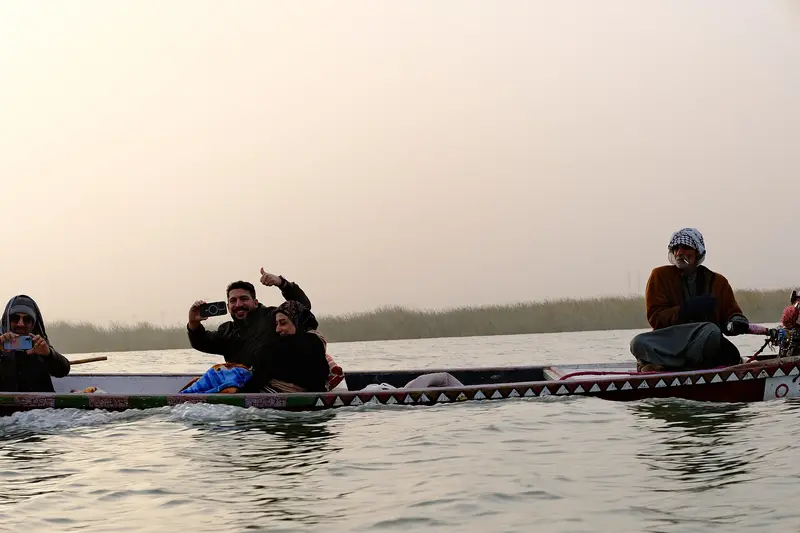
The most straightforward route is through the same boatmen and local operators who run day trips from access points near Al-Chibayish, Al-Hammar, or the areas accessible from Basra’s outskirts. There is no central booking platform for mudhif guesthouses — arrangements are made directly, often in person or through a local guide or fixer.
Steps to take:
- Contact a licensed local guide or established boat operator and specifically ask whether overnight hosting is available with a particular family.
- Agree in advance on exactly what is included — meals (typically, but not always, included), bedding, drinking water, and any transport back to your departure point.
- Confirm the total price before committing. Do not assume anything is included. Check with the operator directly; we cannot publish rates that we have not independently verified.
- Ask whether the host family speaks any English. If not, arrange for your guide to accompany you or at minimum to be reachable by phone.
For getting cash in the right format ahead of your trip, see money in Basra and Basra ATM and exchange rates. The current USD/IQD rate is approximately 1,309 IQD to the dollar. Carry small-denomination Iraqi dinar notes; nobody in the marshes will have change for large bills.
What to Bring for One Night
Pack light but pack smart. You will likely carry your bag in or out of a boat.
| Item | Why |
|---|---|
| Headlamp | No reliable lighting after dark; a headlamp keeps your hands free |
| Insect repellent | Mosquitoes and biting insects are a genuine factor, especially around dusk and dawn |
| Power bank (fully charged) | Assume no mains electricity or that access is intermittent |
| Small toiletries, quick-dry towel | Showering may not be possible; a flannel wash is more realistic |
| Modest, quick-dry clothing | Loose and covering. This is a family household. Pack accordingly. |
| Cash in small notes | See above |
| Reusable water bottle | Drinking water may be provided but bring your own backup |
| Thin sleeping pad or mat | Floors are hard; the extra 500g is worth it |
| Any medication you take regularly | There are no pharmacies nearby |
Leave: heavy bags, valuables you cannot afford to lose, and any expectation of air conditioning.
Facilities Reality Check
Be realistic about what you will find:
- Electricity: May be available from a generator for limited hours, or not at all. Do not rely on it to charge devices overnight.
- Toilets: Basic outdoor facilities. Ask your host at arrival. Privacy varies.
- Water: Potable water is limited. The waterways around you are not drinking water. Bring more than you think you need.
- Connectivity: Mobile signal is weak to absent across much of the marsh interior. Download offline maps and any needed information before you leave Basra.
- Medical support: Remote. Raise any health concerns with a professional before departure.
Verify all of the above with your specific host when you confirm your stay. Conditions vary significantly between locations and families.
Etiquette as a Guest in a Marsh Arab Household
You are sleeping in someone’s home, not a tourism facility. A few practices that matter:
- Greet your host properly. A simple “As-salamu alaykum” goes further than any amount of tourist enthusiasm.
- Remove shoes when entering the mudhif or any interior space unless told otherwise.
- Accept hospitality as offered. Tea and food are given with genuine generosity. Refusing repeatedly can cause offence.
- Ask before photographing. People, particularly women, should never be photographed without explicit permission. Landscapes and reed structures are generally fine.
- Follow the household’s schedule. Prayer times set the rhythm of the day. Fajr at 03:25 means activity begins early.
- Keep voices moderate and be conscious of space you are sharing.
- Leave the mudhif as you found it. Carry out all your rubbish.
For a fuller treatment of cultural expectations and responsible travel in the marshes, see the related guides on getting around Basra and the broader Mesopotamian Marshes guide.
Who Should Skip the Overnight and Do a Day Trip Instead
The overnight is not for everyone. Consider a day trip instead if:
- Heat is a health concern for you. July temperatures in the marsh area track with Basra’s forecast (46–50 °C highs this week). Even with natural ventilation, the heat is serious.
- You have mobility limitations. Getting in and out of low wooden boats, and sitting or sleeping on the floor, requires a reasonable degree of physical flexibility.
- You need reliable medical access. The marsh interior is far from any clinic or hospital.
- You require a private room or bathroom. The communal, open structure of a mudhif is non-negotiable.
- You are on a tight schedule. Getting out of the marshes can take longer than expected if weather, tides, or logistics shift.
A well-timed day trip — leaving early to catch the morning light — captures most of the wildlife and atmosphere without the logistical commitment. See the Mesopotamian Marshes from Basra guide for day-trip logistics.
For accommodation if you prefer to base yourself in the city, see where to stay in Basra or Basra riverfront hotels.
FAQ
Do I need to book the overnight in advance?
Yes. Don’t arrive at the marshes and assume a family will host you on the spot. Arrange everything — stay, meals, bedding, return transport — through a guide or operator before you travel. Check with the operator for lead times.
Is it suitable to stay overnight as a solo woman traveller?
A local guide or a pre-arranged group context makes it more straightforward. As a guest in a family household, you will be treated with respect, but the dynamics of a communal space are worth discussing with your operator in advance so expectations are clear on both sides.
What’s the best time of year to stay overnight?
November through March offers the most manageable temperatures — highs in the low-to-mid 20s °C, occasional rain. This is also when migratory waterbirds peak. Avoid July and August unless heat is not a concern for you; this week’s forecast shows highs above 46 °C.
Can I pay by card or do I need cash?
Cash only, in Iraqi dinar, small denominations. See money in Basra for where to exchange or withdraw before you leave the city.
Will there be mobile signal for emergencies?
Assume no reliable signal in the marsh interior. Share your itinerary with someone who is not travelling with you, including the name of your operator and your expected return time.