
One Perfect Day (and Evening) in Basra
You have a single free day — maybe a business layover, maybe your first visit before heading to the marshes. This itinerary gives you the clearest possible route through Basra’s most distinctive places: Ottoman-era wooden balconies, river souks, a waterfront walk, and a grilled fish dinner beside the Shatt al-Arab. Start early, rest at midday, and let the city come alive again in the late afternoon.
Who This Day Is For
This plan works for three kinds of visitor: the first-timer who wants an honest introduction to Basra in a single sweep; the business traveller with one free afternoon and evening; and the transit passenger with a full day before an onward flight. The schedule is loosely timed around the heat — July highs can reach 46–51 °C according to current forecasts — so the heaviest sightseeing is front-loaded before noon, and the afternoon is spent resting or in shaded indoor spaces. If you are visiting in the cooler months (November through March, when normals run 18–26 °C), you can shuffle the order freely.
All prices and opening times listed below should be confirmed with the operator or official site before you visit — none were available in verified data at the time of publication.
Morning: Old Basra and the Shanasheel Houses (7:00 – 10:30)
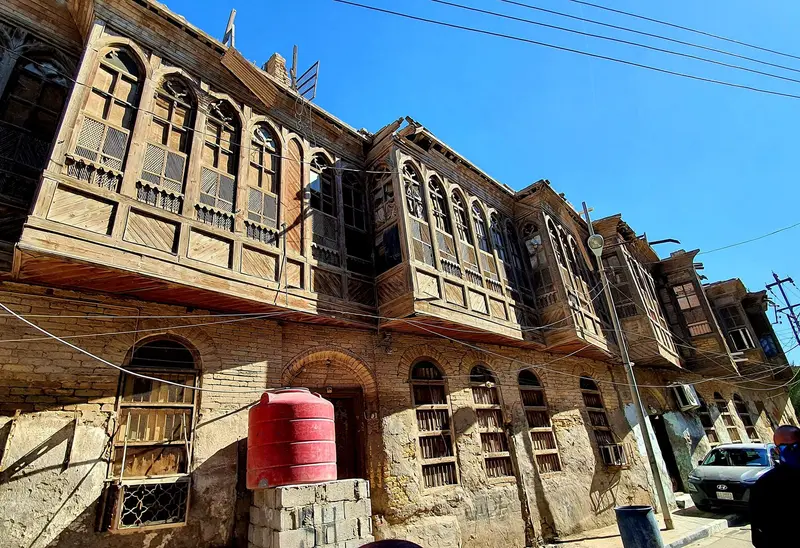
Begin as early as you can manage. The old residential quarter of Basra contains some of the most recognisable architecture in southern Iraq: the shanasheel, projecting wooden bay windows with carved lattice screens that catch river breezes and shade the street below. Walking through this area in the low morning light, before heat and traffic build, gives you the best conditions for both photography and orientation.
From the shanasheel district, make your way to the Basra Museum. Housed in one of the city’s landmark buildings, it covers the archaeology and cultural history of the region — Mesopotamian artefacts, maritime heritage, and material relating to the broader Shatt al-Arab delta. Check opening times and any admission requirements directly with the museum before you arrive; hours can vary. Allow 60 to 90 minutes inside.
Practical note: bring cash in Iraqi dinars. The current exchange rate is approximately 1 USD = 1,309 IQD at the time of writing. ATMs exist in the city, but it is worth arriving with local currency — see money in Basra and Basra ATM and exchange rates for detail on where to exchange and what to expect.
For getting between these two morning stops, tuk-tuks and shared taxis are the most common short-hop options. Full guidance on local transport is at getting around Basra.
Midday: Retreat from the Heat (10:30 – 14:30)
In July, the sun between 11:00 and 15:30 is severe. Locals know this well. The city quiets noticeably after the Dhuhr prayer (around 11:55 on a midsummer day). This is the right time to do what residents do: find a cool, shaded restaurant, eat a proper lunch, and wait out the worst of the afternoon.
Mid-range restaurants near Ashar and the central districts are your best options — look for places serving rice-based dishes, kebabs, and Iraqi stews. Budget or mid-range meals are easy to find; confirm current prices on the spot. Avoid long outdoor walks between roughly 11:00 and 15:00.
This is also a good window to check into your accommodation if you have not already, or to catch up on logistics for the rest of the day. See where to stay in Basra if you still need to book.
Late Afternoon: Ashar Souks or Sinbad Island (15:00 – 17:30)
As the heat begins to ease after Asr prayer (around 15:33), the souks of Ashar come back to life. Ashar is Basra’s traditional commercial district, running along a creek that feeds into the Shatt al-Arab. The souk here covers spices, fabrics, electronics, gold, and everyday goods — it is a working market, not a tourist set-piece, so approach it as an observer as much as a shopper.
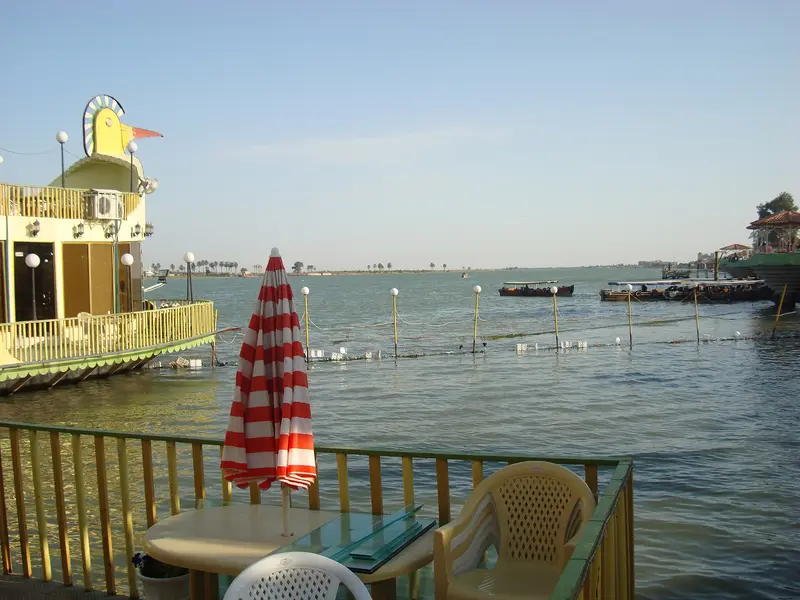
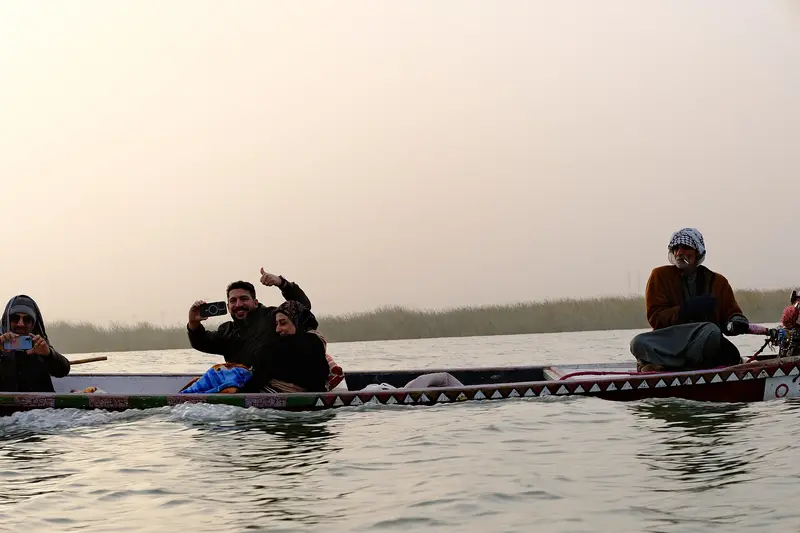
If you prefer water over commerce, a short boat trip to Sinbad Island — a riverside leisure area — is a popular local outing in the late afternoon. Access is by small river boat from the waterfront; check with operators at the jetty for current fares and departure times, as these are not fixed in advance.
Either option puts you on or near the river in time for the evening.
Evening: The Corniche Walk and Masgouf Dinner (18:00 – 20:30)
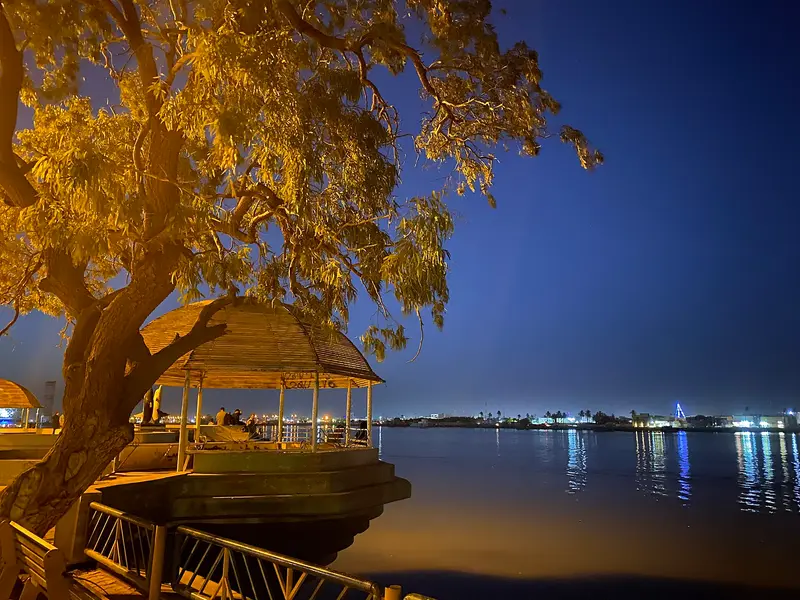
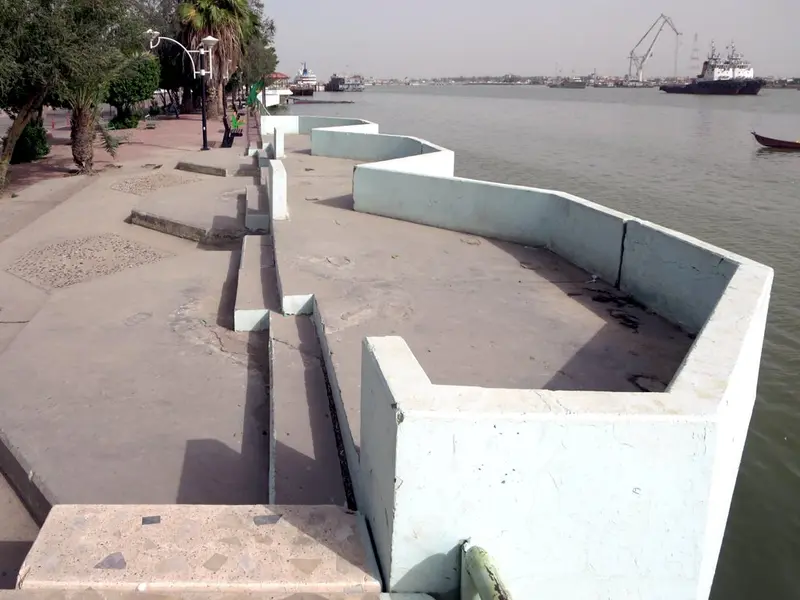
The Basra Corniche is the city’s most public social space. As the sun drops toward the Shatt al-Arab — Maghrib on a July day falls around 18:52 — the riverside promenade fills with families, cyclists, and people sitting on the low walls watching the water. Begin your walk at or near the Al-Sayyab statue, the monument to the Iraqi poet Badr Shakir al-Sayyab that has become the symbolic anchor of the Corniche.
Walk north or south at your own pace. The light at this hour is as good as it gets in Basra.
Dinner here means masgouf: whole carp from the Tigris or Shatt al-Arab, split and slow-grilled on an open fire beside the river. This is one of Iraq’s most distinctive dishes, and the riverside restaurants along and near the Corniche are the natural place to eat it. Expect to order by weight or by whole fish; check current prices with the restaurant. Budget and mid-range options both exist. Allow 60 to 90 minutes for a full masgouf dinner — it is not a fast meal.
After Dinner: Tea and Dominoes on the Corniche (20:30 onwards)
After dinner, the Corniche remains lively well past dark in summer — the heat makes evening the most comfortable outdoor time of day. Tea stalls and small cafés set up plastic chairs along the waterfront. Dominoes, cards, and tawla (backgammon) are standard evening pastimes. There is no formal programme here; this is ambient city life, and you are welcome to sit and watch it.
Isha prayer falls around 20:19 in midsummer; things settle somewhat after that, though the riverfront rarely empties entirely before midnight in July.
Compressed Version: One Corniche Hour Before Dinner
If your time is genuinely limited — a late arrival, an early departure, or a single free window of 90 minutes — skip everything else and go straight to the Corniche at sunset. Walk from the Sayyab statue, find a riverside masgouf restaurant, eat dinner, and take tea on the waterfront. You will have seen the part of Basra that most stays with visitors, and spent it in the city’s most social space.
Practical Notes
What to pre-book: Your accommodation, and any intercity transfer (airport, marshes, onward travel). See Basra airport arrival guide if you are arriving by air, and getting to Chibayish from Basra if you plan to extend your trip to the marshes.
What is walk-up: Museum entry, souk browsing, boat trips to Sinbad Island, masgouf restaurants, and Corniche tea stalls — all of these are found on arrival. Confirm hours and prices with each operator directly.
Cash: Carry Iraqi dinars. The current rate is approximately 1,309 IQD to the dollar. Most small vendors, tea stalls, and market traders do not accept cards.
Transport between stops: Tuk-tuks and shared taxis connect the main districts. For a full overview, see getting around Basra.
First time in Basra? The first 24 hours in Basra guide covers orientation essentials that complement this itinerary.
FAQ
How much walking does this itinerary involve? The morning section (shanasheel and museum) involves 30–60 minutes of walking depending on how far apart the sites are — confirm the distance when you arrive and consider transport if the heat is high. The Corniche walk is as long as you make it; 30 minutes is enough to get a feel for it.
Can I do this itinerary in the afternoon and evening only? Yes. If you arrive after midday, skip straight to the Ashar souk section at 15:00, do the Corniche at sunset, and have masgouf for dinner. The morning heritage section can be saved for a second day or a future visit.
Do I need to book the masgouf restaurant in advance? Most riverside masgouf restaurants are walk-in. During busy periods — weekends, holidays — it may be worth calling ahead. Check with the operator.
What should I wear in the old quarter and souks? Modest, loose, light-coloured clothing is practical both for the heat and for the environment. Covered shoulders and legs are appropriate in the market and museum areas.
Is one day enough to see Basra? One day gives you a coherent introduction. The mesopotamian marshes from Basra are a full separate day trip that most visitors consider essential. If you have more time, see where to stay in Basra for accommodation options across different budgets.