
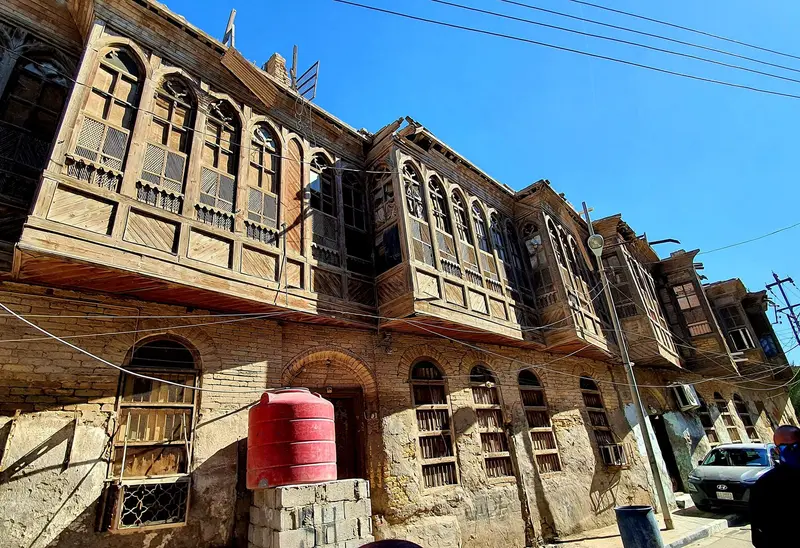
Ashar souks and canals: markets in the heart of Basra
The Ashar district is Basra’s oldest and busiest commercial quarter. Along a network of lanes radiating from the Ashar Canal you will find spice dealers, cloth merchants, gold jewellers, date vendors, a lively fish market, and traditional wooden boats moving on the water below shanasheel-decorated mansions. If you visit one part of Basra for its market culture, this is it.
Ashar as the old commercial heart
The Al-Ashar district has functioned as Basra’s main commercial hub since the city’s early days, when traders from across the globe passed through its port (source). That mercantile identity is still readable in the built fabric: the canal itself is lined with traditional wooden boats, and the mansions on its banks are fronted by shanasheel — the intricate projecting wooden balconies engineered to provide shade, cross-ventilation, and privacy (source).
Behind the canalside façades, labyrinthine streets branch into specialised souks selling gold, textiles, and perfumes (source). One section, historically known as Souk al-Hunud (the Indian Market), takes its name from the Indian traders who once frequented Basra’s port and remains the neighbourhood of choice for spice buyers (source).
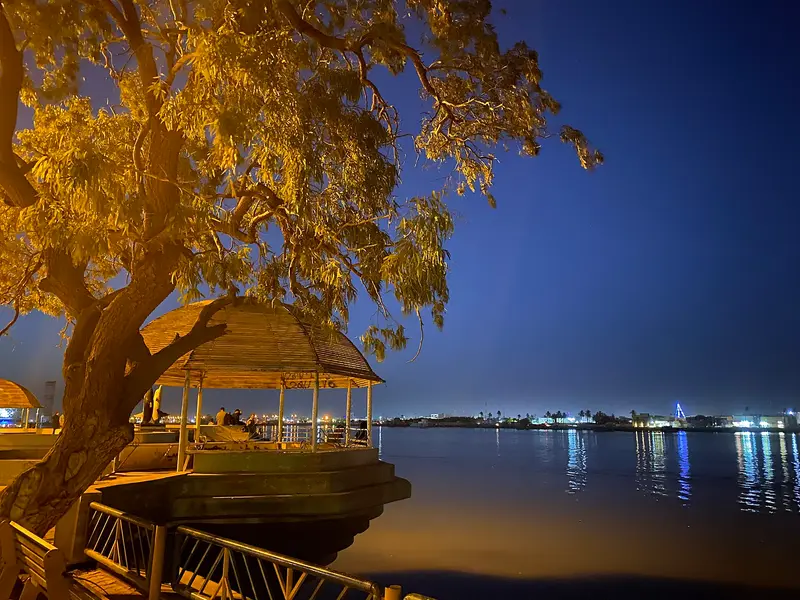
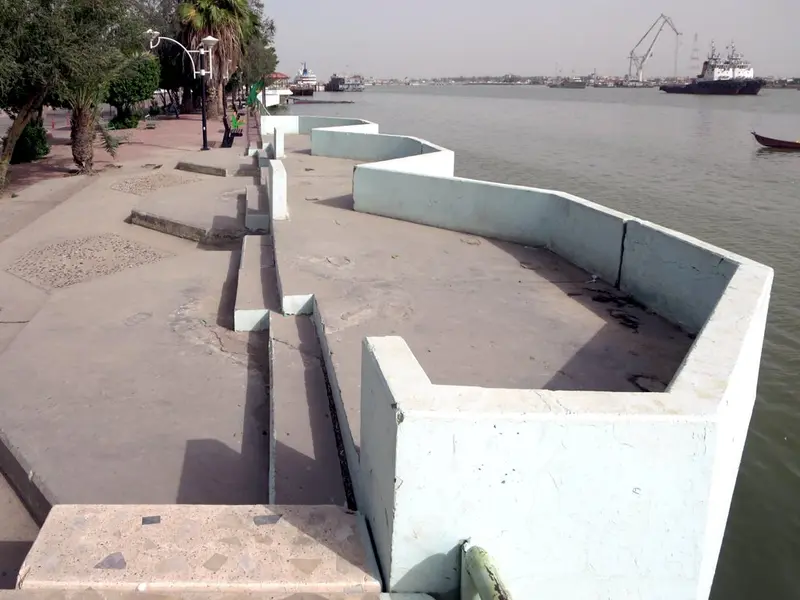
For a broader orientation to Basra’s districts and waterfront, see Basra corniche and neighbourhoods.
The markets: what’s sold and the atmosphere
Souk al-Hout — the fish market
The fish market is one of the most visceral market experiences in the city. Vendors display the morning’s catch — carp, catfish, and river species sourced locally — on slabs of ice, with buying and selling conducted at speed. Arrive before 9 a.m. to see the widest selection; activity winds down sharply by midday. The smell and noise are considerable; it is not a place for slow browsing.
Produce, spice, and date lanes
Beyond the fish market, stalls spill into covered and semi-covered lanes selling vegetables, fruit, and other produce (source). The spice section rewards slow walking: loose sacks of turmeric, dried limes (loomi), cumin, sumac, and blended Iraqi spice mixes are sold by weight. Dates — Basra’s most famous agricultural export — appear in multiple grades and presentations; sellers often offer tastings.
Gold, textiles, and everyday goods
The main Ashar commercial streets carry gold jewellers clustered together (standard practice in Iraqi markets), alongside cloth merchants selling fabrics by the metre, and shops stocking perfume, incense, and everyday household items (source). The nearby markets of Al-Mubarakiya and Al-Khayyam extend the range into handicrafts and more local products (source).
For an upscale shopping strip rather than a souk experience, Al-Jaza’ir Street offers boutiques, electronics stores, and a lively evening crowd (source) — a different atmosphere entirely.
A practical route through the souks and canals
A half-day loop works well on foot:
- Start at the Ashar Canal bank — walk the waterfront to observe the wooden boats and the shanasheel architecture overhead. Keep the canal on one side; the main souk entrance streets open off the other.
- Turn into the spice and produce lanes — these parallel streets are narrowest and most atmospheric in the morning. Follow your nose toward the spice quarter and Souk al-Hunud.
- Continue to Souk al-Hout — the fish market is typically positioned close to the water. Ask locally for the current entrance; market layouts shift.
- Cut back through the gold and textile streets — these run roughly parallel to the main road and are easiest to navigate by keeping the canal generally in view.
- Return along the canal — the afternoon light on the shanasheel is worth the return walk.
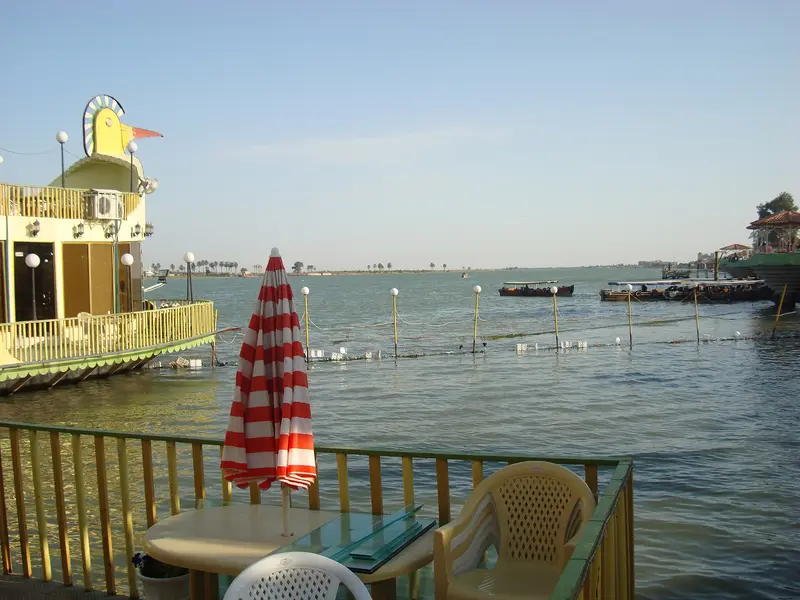
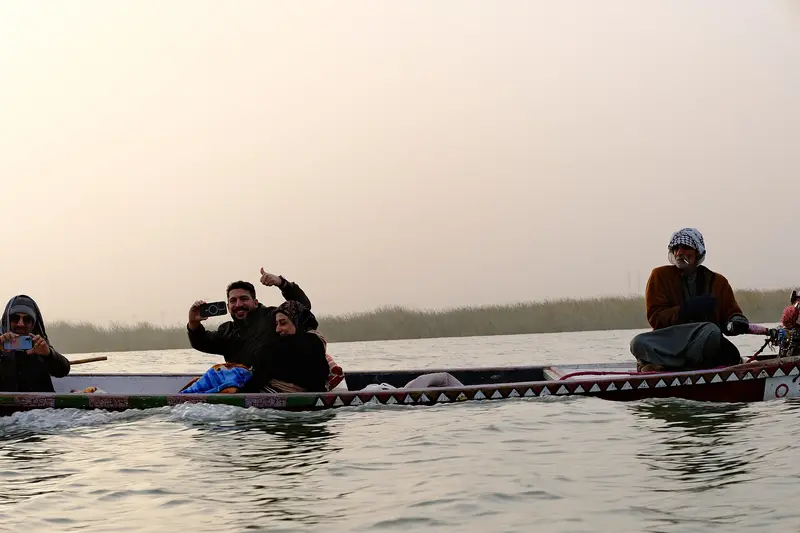
Visitors can also arrange a short boat ride along the creek to see the canalside from the water (source). Check with boat operators on the day for availability and fare.
For transport to and around Ashar, see getting around Basra.
What to buy
Spices and dried limes — genuinely local, lightweight, and easy to pack. Prices are negotiated; cash is the norm throughout the market.
Dates — multiple grades are sold loose or boxed. Tasting before buying is accepted practice.
Textiles — fabric by the metre and ready-made garments; quality varies widely so inspect closely.
Gold jewellery — priced by weight against the day’s gold rate; the price of the piece will be quoted in Iraqi dinars. The current indicative exchange rate is approximately 1,309 IQD per USD (source), which helps you cross-check if you’re doing mental conversions, though actual transaction rates will vary.
Perfume and incense — oud-based perfumes and bakhoor (incense resin) are sold in the covered lanes and make durable souvenirs.
Haggling and cash are the norm across Ashar. Confirm all prices on the day; this guide does not list specific figures.
For money and currency exchange guidance, see money in Basra.
Best time to visit
Mornings (7–11 a.m.) are the most active period for the fish market and produce stalls. Traders are fully stocked, produce is freshest, and the working pace of the market is most visible.
Evenings (after Asr prayer, roughly 3:30 p.m. onward) bring a different crowd — families, leisure shoppers, and the gold and textile trade peaks. On the current schedule, Asr falls at 15:33 and Maghrib at 18:50 (source), so the post-Asr window gives you roughly three hours of active market time before the evening prayer pause.
Friday rhythm: Friday is the Islamic day of rest. Many smaller shops close in the morning; some open after Friday prayers. The market is quieter and the canal walk is more relaxed. Saturday through Thursday are full trading days.
Heat: July highs in Basra are currently forecast around 47–48 °C (source). The covered lanes provide partial shade, but mornings are significantly more bearable than afternoons. November through March (typical highs 18–26 °C) is the most comfortable period for extended market walking.
Photography and etiquette
- Ask before photographing individuals, especially vendors and women. A nod and a smile are a reasonable opening; accept a refusal without pressing.
- The fish market and spice stalls are generally more tolerant of cameras than gold shops or sections where women are the primary customers.
- Moving through busy lanes with a camera bag slows other people down — keep equipment accessible but compact.
- Dress modestly; this is a working market, not a tourist site. Covered shoulders and loose trousers or a long skirt are appropriate for all visitors.
- Do not photograph government buildings, military checkpoints, or security infrastructure.
Eating in and around the souk
Juice stands are scattered through the main lanes — fresh pomegranate, orange, and mango juice are common. Small grill stalls serve kebab and flatbread at midday. For a more substantial meal, several simple restaurants operate on the streets leading away from the canal. Ask locals for current recommendations; the lineup changes. Check with individual vendors for opening times and any current closures.
Combining Ashar with nearby areas
The Ashar district connects naturally with a corniche walk along the Shatt al-Arab waterfront; see Basra corniche and neighbourhoods for what to expect along the water. If this is your first day in the city, your first 24 hours in Basra outlines a logical sequence for combining the souks with other central landmarks.
FAQ
Do I need to haggle for everything in Ashar?
Haggling is standard for spices, dates, textiles, and handicrafts. Gold is priced by the day’s weight rate with some margin for labour; negotiation is still expected but is less dramatic. Juice stands and food stalls typically have fixed prices. When in doubt, ask whether the price is fixed before committing.
Are the souks open every day?
Most shops trade Saturday through Thursday. Friday mornings are largely closed; some reopen after Friday prayers. Individual shops set their own hours — check on the day if you have a specific destination in mind.
Can I pay by card anywhere in the souk?
Expect cash only throughout the traditional market. Carry Iraqi dinars in small denominations. See money in Basra for exchange and ATM guidance.
Is the canal walkable, or do I need a boat?
The canal bank is walkable on foot; the experience gives you the shanasheel views from street level. Boat rides are sometimes offered by local operators for a closer look from the water — confirm availability and agree on the fare before boarding.
How long should I allow for the souks?
A focused walk through the main lanes and along the canal takes 90 minutes to two hours. Add time for the fish market and produce stalls in the morning, and allow extra time in the evening if you intend to browse the gold and textile sections. A half-day is comfortable; a full day with meals and a canal walk is possible.