
Dates and sweets of Basra: Barhi, halva and date country
Basra sits at the heart of what was historically one of the world’s great date-producing regions. The palm groves that line the Shatt al-Arab waterway and spread deep into the Abu al-Khaseeb district have supplied local markets, regional traders and global importers for centuries. If you are visiting and want one genuinely local thing to eat, buy and carry home, dates — and the sweets made from them — are it.
Basra as historic date country
The palm groves and the Shatt al-Arab
The date palm is inseparable from the landscape of southern Iraq. Along the Shatt al-Arab and through the Abu al-Khaseeb district south of the city centre, groves line the waterways in long, dense rows. The combination of the river’s water, the alluvial soil and the intense summer heat creates conditions that produce fruit with a flavour profile that date traders historically considered a benchmark.
Abu al-Khaseeb is the area most associated with premium date production close to Basra. Its narrow creeks and palm-lined banks are accessible by road and, seasonally, by small boat. A half-day trip out from central Basra gives you a direct look at where the fruit actually comes from — and often a chance to buy directly from growers at roadside stalls.
For general orientation around the city and its districts, see getting around Basra and the first 24 hours in Basra guide.
Barhi and other varieties
What Barhi dates are
Barhi is the variety that defines Basra’s reputation internationally. The name refers to the hot southern wind (barh) that the tree is said to thrive under — and Basra’s summers, which regularly push past 46 °C in July and August (source: Open-Meteo), provide exactly that. Barhi dates are round, with a thin skin and an unusually rich, caramel-like flavour when fully ripe.
The fresh-yellow stage vs cured
This is the detail that surprises most visitors: Barhi dates can be eaten at two distinct stages.
- Khalal (fresh-yellow): Harvested before full ripening, the fruit is crisp, mildly sweet and slightly astringent — closer in texture to an apple than to what most people picture when they think of a date. This stage is considered a seasonal delicacy and is not available year-round.
- Rutab / Tamr (cured): The more familiar soft, deeply sweet, amber-to-brown date. These are available much longer and are what you will find boxed in shops and at the airport.
Important: The exact window for fresh-yellow Barhi varies year to year depending on the growing season. Check locally for this year’s harvest dates — ask at your accommodation, at Ashar market, or at stalls in Abu al-Khaseeb.
Other varieties you will encounter in Basra include Khastawi (known for a syrupy, almost liquid centre), Zahdi (drier, lighter, longer shelf life), and Sayer (widely traded, dark and sticky). Each has its own price tier and local following.
Where to buy
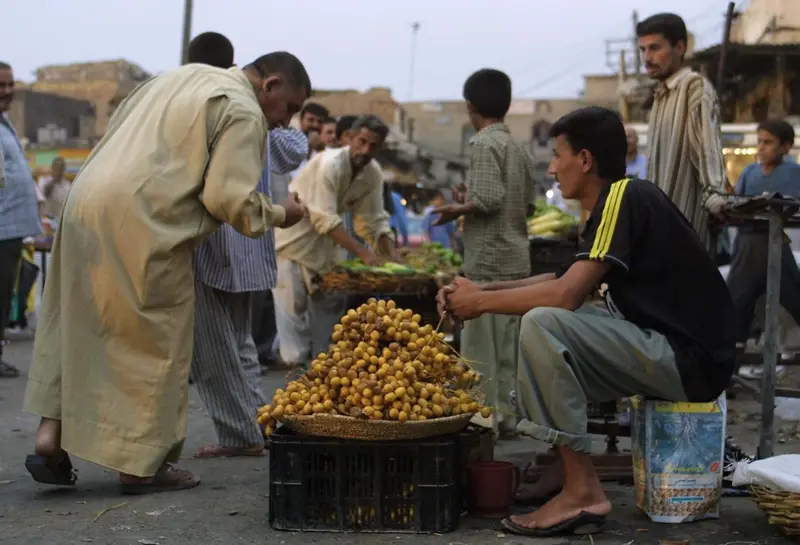
Roadside stalls in Abu al-Khaseeb and date country
During harvest season, stalls appear along the main roads heading into Abu al-Khaseeb. These offer the freshest fruit and the most direct connection to producers. Prices at stalls are typically quoted per kilogram; bargaining is normal but not obligatory. Payment is almost universally in Iraqi dinars — the current exchange rate is approximately 1,309 IQD per USD (source: ExchangeRate-API, fetched 2026-07-20). See money in Basra and Basra ATM and exchange rates for practical currency guidance.
Ashar market
Ashar is the commercial district most visitors use as a shopping base. Its covered market lanes include dedicated stalls and small shops selling cured dates in bulk and in gift packaging. You can compare varieties side by side, ask for samples, and have boxes packed on the spot. The market is most active in the morning and again in the late afternoon after Asr prayer (15:33 today, source: Aladhan API). Check with individual stall holders for current availability and pricing.
A note on shops vs stalls
Shops in Ashar and central Basra tend to carry year-round stock (primarily cured dates), pre-packaged boxes, and a wider range of date-based sweets. Roadside stalls in Abu al-Khaseeb are more seasonal and more likely to carry fresh-khalal fruit when it is available. If fresh Barhi is your goal, head out of the city centre.
Boxed dates as gifts and take-home souvenirs
Boxed dates are the default office and family gift from a trip to Basra, and the market caters to this thoroughly. You will find:
- Simple kilo boxes in plain packaging, practical and inexpensive.
- Presentation boxes with mixed varieties, pitted dates, or dates stuffed with nuts or coconut — aimed at gift-giving.
- Vacuum-sealed packs with longer shelf lives, better suited to international travel in hand luggage.
If you are flying out via Basra airport, shops in the terminal carry boxed dates — but the selection and price is generally better in Ashar or Abu al-Khaseeb. See the Basra airport arrival guide for what to expect at the terminal.
Check current airline carry-on rules directly with your carrier before buying large quantities; liquid-stage dates (rutab) may be subject to restrictions.
Basra sweets: halva and local specialities
Halva
Halva (حلاوة) in Basra comes in several forms. The most common is sesame-based — a dense, crumbly paste made from tahini and sugar, often flavoured with cardamom or rose water. It is sold by weight in sweet shops (halawiyat) across the city, cut from large slabs. Look also for varieties incorporating pistachios, almonds or saffron.
Date-based halva, made by cooking down pressed date paste with clarified butter and sometimes semolina, is a distinctly southern Iraqi preparation. It is heavier and richer than the sesame version.
Dibis and dibis-based sweets
Dibis is date syrup — a thick, dark molasses pressed from ripe dates. It appears on breakfast tables poured over bread and butter (a combination called dibis wa rashi when mixed with sesame paste), and forms the base of several local sweets and pastries. Bottles of dibis travel well and make a practical souvenir.
Other things to try
- Kleicha: Date-filled pastry cookies, common across Iraq but made fresh at bakeries throughout Basra.
- Aish bil tamr: A simple, traditional preparation of bread baked or layered with dates.
- Date ice cream: Available at some city-centre cafés and sweet shops; ask locally for where to find it this season.
Seasonality, freshness and storage
Picking fresh dates
For khalal-stage (fresh-yellow) dates: look for firm, evenly coloured fruit without soft spots or split skin. They should smell clean and slightly floral.
For cured (tamr) dates: avoid boxes where the fruit looks crystallised with white sugar deposits on the surface (a sign of age), or where dates are stuck together in a wet, fermenting mass. A slight natural gloss is normal.
Storing what you buy
- Fresh khalal dates: Eat within a few days. Refrigerate if not eating immediately.
- Soft cured (rutab/tamr): Refrigerate in an airtight container; most commercial varieties keep for several weeks.
- Dry-cured varieties (Zahdi, Sayer): Can be kept at room temperature in a sealed container for considerably longer. Check with the seller.
- Dibis and packaged halva: Follow packaging instructions; usually stable at room temperature until opened.
A short trip out to Abu al-Khaseeb
Abu al-Khaseeb lies south of central Basra along the Shatt al-Arab. The main draw is the canal-side groves and the quiet pace of the waterway villages. A visit works best as a half-day from the city.
What to do:
- Walk or drive the main road alongside the groves and stop at roadside stalls.
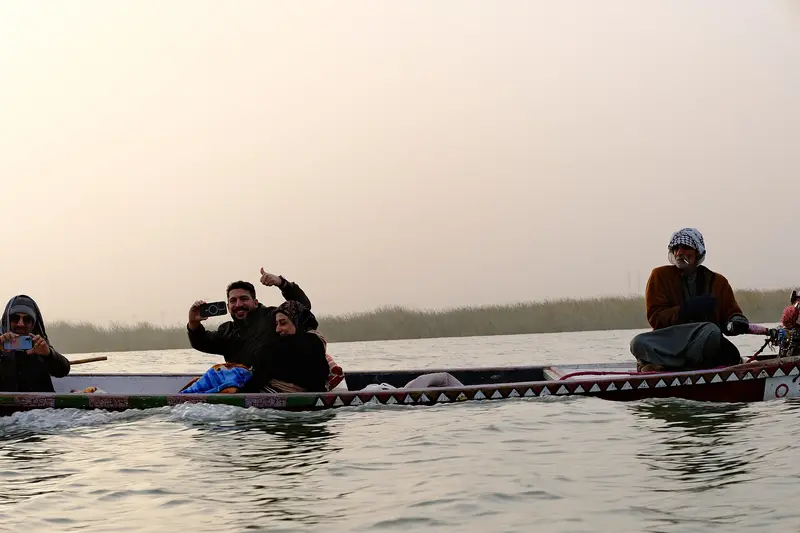
- Arrange a short boat trip on the creeks through your accommodation or a local operator — check with them for current availability and pricing.
- Visit during the morning to avoid the peak afternoon heat (highs are currently around 47–48 °C, source: Open-Meteo).
Note that prayer times shape the rhythm of the day: shops and stalls may close briefly around each prayer. Today’s Maghrib is at 18:51 (source: Aladhan API), after which the evening market activity resumes.
For context on the broader waterway environment south of Basra, the Mesopotamian Marshes from Basra guide covers day trips into that landscape.
FAQ
Q: Can I find fresh yellow Barhi dates any time of year? No. The khalal (fresh-yellow) stage is strictly seasonal and the window shifts year to year. Ask locally or check with date sellers in Abu al-Khaseeb or Ashar for this year’s availability.
Q: Are Basra dates available at the airport? Yes, the terminal has shops carrying boxed dates. The range is more limited than in Ashar market, and prices may differ. See the Basra airport arrival guide for terminal layout details.
Q: What currency do I need for buying dates at roadside stalls? Iraqi dinars. Most stalls do not accept foreign currency. The current rate is approximately 1,309 IQD per USD (source: ExchangeRate-API). For ATMs and exchange offices, see Basra ATM and exchange rates.
Q: Can I take dates home on a plane? Most cured and packaged dates travel well as checked or carry-on luggage. Liquid-stage (rutab) dates and dibis syrup may be subject to liquid restrictions in carry-on bags. Confirm with your airline and destination country’s customs rules before buying in bulk.