
Basra Packing Checklist by Season: Climate, Dress Code & Health Items
Packing for Basra means planning for one of the most extreme climates in the world. Monthly average highs range from 18 °C in January to 46 °C in July and August, with essentially zero rainfall from June through September. What you bring — and how you dress — shapes your comfort and your ability to move easily through the city’s business districts, mosques, and open-air markets alike.
Summer (June–August): Extreme Heat and Sun Protection
June through August sees average daily highs of 44–46 °C, with lows staying around 28–30 °C through the night. Rain is effectively zero during these months.
Clothing
- Loose, long-sleeved shirts in breathable fabrics: linen and lightweight cotton are standard choices. Light-coloured fabrics reflect heat.
- Full-length or below-the-knee trousers for men and women. Shorts are rarely appropriate outside private hotel spaces.
- A light scarf or shawl that can cover your head, neck, or shoulders within seconds — useful for entering any building or area where more coverage is expected.
- Sandals with ankle straps, not flip-flops, for stability on uneven paving.
Sun and Heat Gear
- Sunscreen SPF 50+ — bring enough from home. Availability in pharmacies varies by district; do not count on finding your preferred brand.
- Sunglasses with UV400 protection
- A wide-brimmed hat or cap — a kefia (keffiyeh) purchased locally is extremely practical and widely accepted.
- Insulated water bottle (at least 1 litre). Hydration is non-negotiable outdoors.
- Cooling towel — compact when dry, significant relief when wet.
- Small, portable battery-powered fan — useful during power interruptions.
Common Mistake
Packing short-sleeved shirts as your primary layer. Long sleeves in the right fabric are cooler outdoors by shielding skin from direct radiation, and they meet cultural expectations without a second thought.
Winter (November–February): Layering and Rain Preparation
January averages a high of 18 °C and a low of 7 °C, with about 32 mm of rain spread across the month. February and December are similarly wet. Streets in older districts can flood quickly during heavy rain because drainage infrastructure varies significantly.
Clothing
- A mid-weight jacket or fleece layer — temperatures drop sharply after sunset and before dawn.
- One genuinely warm layer (wool jumper or down gilet) for evening use.
- Waterproof outer shell — a packable rain jacket takes minimal space and earns its place.
- Closed-toe, waterproof footwear — wet, unpaved surfaces near the souks and waterfront can be muddy. Avoid leather-soled shoes.
- Umbrella — compact, windproof models hold up better than cheap promotional ones.
Common Mistake
Assuming Basra’s reputation as a hot city means winter warmth. Evenings in January can be genuinely cold, particularly near the Shatt al-Arab waterway.
Spring and Autumn Transition Weather: Variable Conditions and Dust Storms
March–May and September–October are transition months. Spring averages rise from 26 °C in March to 39 °C by May. Autumn runs the pattern in reverse. Both seasons can bring shamal dust storms — walls of fine, ochre-coloured sand that reduce visibility rapidly and coat everything.
Packing Additions
- N95 or FFP2 dust masks (or a supply of close-fitting cloth face coverings). Standard surgical masks do not filter fine particulate effectively.
- Sealable zip-lock bags for electronics, passports, and medication during a storm.
- Eye drops (saline) — dust irritates eyes significantly.
- Goggle-style sunglasses that wrap around rather than sit open at the sides.
- Layers you can add or remove within a single day — morning temperatures in April can be pleasant; afternoons reach 33 °C.
Cultural Dress Standards
Business Contexts
Business meetings call for conservative, professional dress regardless of gender. Men typically wear full trousers and collared shirts; a jacket is expected in formal settings. Avoid casual T-shirts. Women are expected to dress modestly: full-length trousers or skirts, a long-sleeved top or blouse, and a headscarf is advisable and will be expected in many professional and institutional settings.
Leisure and Street
The same principle of covering shoulders, upper arms, and legs applies day to day. Jeans and long-sleeved shirts are universally acceptable for men. Women will find lightweight, full-coverage clothing practical and appropriate.
Mosque Visits
- Women: headscarf is required; long, loose clothing covering arms and legs is mandatory. Carry a spare scarf in your bag at all times.
- Men: long trousers; remove shoes at the entrance.
- Both: bring a small bag or use a shoe cover if provided.
For guidance on planning visits around prayer times — today’s Dhuhr is at 11:41, Asr at 15:10, Maghrib at 17:46 — check the Aladhan API for daily updates. Visiting immediately after prayer ends is generally more relaxed than arriving just before.
Medications, First Aid, and Pharmacy Availability
Data fields for recommended medications were not supplied for this edition. General guidance only is provided here; consult your own physician or travel health clinic before departure.
Items to Bring From Home
- Prescription medications in original labelled packaging, with a doctor’s letter if quantities are significant.
- Oral rehydration salts — especially critical in summer.
- Imodium or equivalent antidiarrhoeal.
- Antihistamines (dust and heat can both trigger reactions).
- Blister plasters — uneven paving generates blisters faster than expected.
- Hand sanitiser gel (80 ml travel size).
- Sunscreen and lip balm with SPF.
- Basic wound care: antiseptic wipes, adhesive dressings, medical tape.
Pharmacy Availability
Pharmacies (سيدلية, saydaleya) operate in all major districts of Basra including Ashar, the commercial centre, and Bradhiya. Generic medications are generally available, but specific branded products or less common formulations may not be in stock. Bring a sufficient supply of anything you cannot go without. Check with a local operator or your accommodation for the nearest 24-hour pharmacy.
For currency planning: the current rate is approximately 1 USD = 1,311.5 IQD. See money in Basra for practical payment guidance.
Electronics: Voltage, Outlets, and Adapters
Iraq operates on 220–240 V, 50 Hz. Outlets in Basra are typically the European two-pin round (Type C) and the older British-standard Type G (three rectangular pins). In practice, both types appear in hotels and homes.
What to Bring
- Universal travel adapter — a multi-region adapter covering Type C and Type G covers most scenarios.
- Surge-protected power strip — voltage fluctuations occur, particularly during power transitions to generators. One good strip protects all your devices from a single adapter.
- Dual-voltage devices — most modern laptops, phone chargers, and camera chargers are rated 100–240 V and work natively; check the label on your brick. Single-voltage devices (some hair tools) require a voltage converter, not just an adapter.
- Portable power bank (20,000 mAh or larger) — electricity interruptions are a practical consideration; a charged power bank keeps your phone usable.
- Dust caps for ports during storm season — fine particulate works into USB and charging ports.
FAQ
Is there a specific bag type that works best for Basra?
A lightweight daypack in a neutral colour is practical for daily movement. Avoid bags with excessive external pockets or padlocks that attract attention at checkpoints. A crossbody bag worn at the front is common among visitors navigating busy markets.
Can I buy most of these items in Basra instead of packing them?
Everyday items — scarves, sandals, water bottles, basic toiletries — are readily available in Ashar market and major supermarkets. Specialised items such as N95 masks, specific sunscreen SPF levels, or branded medications are less reliable. The conservative approach is to bring what you cannot afford to go without.
What should I pack differently for a marshes day trip versus city days?
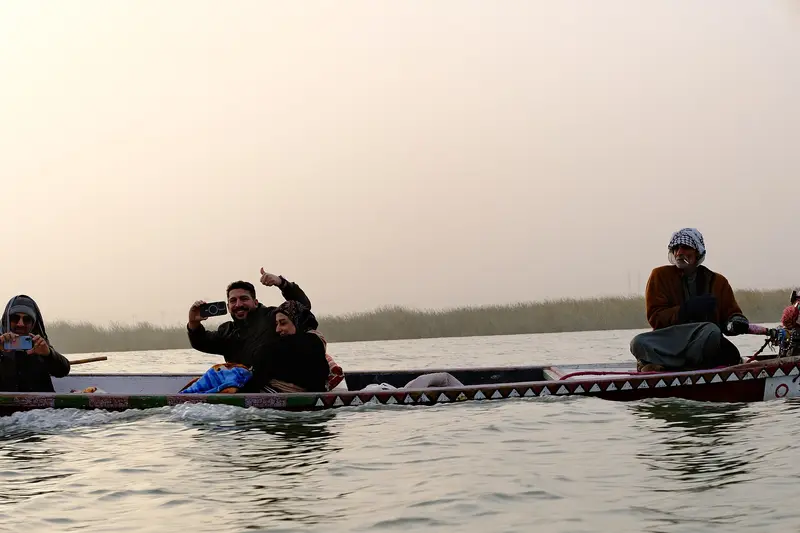
For the marshes, add insect repellent (DEET-based), waterproof sandals or shoes that can get wet, and a full change of clothes in a sealed bag. A wide-brimmed hat is even more important without urban shade. See the marshes day trip guide for a full breakdown.
How do I manage the heat if I have outdoor meetings?
Schedule outdoor movement before 10:00 and after 17:00 in summer. Carry your water bottle everywhere. Identify air-conditioned lobbies, cafes, or mosques along your route as rest points. Loose, light-coloured long-sleeved clothing is not optional in summer — it is functional.
What documents should I pack alongside clothing and gear?
Copies (printed and digital) of your passport, visa, invitation letter if applicable, travel insurance details, and hotel confirmation. Store one printed set separately from the originals. Check your first 24 hours in Basra for arrival-day logistics, and the Basra airport arrival guide for what to expect at the terminal.