
Masgouf and river fish in Basra: what to order and where
Masgouf is Iraq’s most recognised dish: a whole river fish — traditionally carp — split open, seasoned simply, and slow-grilled over an open fire of fruit-wood and dried reeds. In Basra, where the Shatt al-Arab waterway defines the city, river fish is not restaurant food so much as civic ritual. If you eat one meal in Basra, this should be it.
What masgouf is — and why Basra does it well
The word masgouf (مسقوف) describes both the technique and the resulting dish. A live or very fresh carp is butterflied from the back, rubbed with turmeric, tamarind, and rock salt, then stood upright beside — not over — an open fire for two to three hours. The slow, indirect heat renders the fat slowly and gives the skin a lightly charred crust while the flesh stays moist.
Basra’s position at the confluence of the Tigris and Euphrates rivers, and along the Shatt al-Arab, historically gave it access to some of Iraq’s best freshwater carp. The city’s grill houses and floating restaurants have refined the preparation over generations. The fish you eat here has a richer, more mineral character than the same dish made inland, a reflection of the brackish water the carp inhabit in this delta environment.
Masgouf is considered the centrepiece of celebratory eating throughout southern Iraq — a graduation, a family reunion, a guest’s arrival. Understanding that context shapes how you experience it.
How masgouf is served: the full ritual
Expect the fish to arrive whole on a platter lined with flatbread (samoon or khubz). Eating with your hands is not just acceptable — it is the default. The bread serves as a utensil and a side simultaneously.
Standard accompaniments you will see on the table:
- Amba — a fermented mango pickle condiment with a sharp, savoury punch. A small amount goes a long way.
- Raw onion and tomato salad — chopped simply, dressed with lemon, sometimes parsley.
- Pickled vegetables (torshi) — cucumber, turnip, or mixed, served in a small bowl.
- Flatbread — always, and usually more arrives unasked.
- Lemon wedges — squeeze liberally over the fish.
The host or most senior person present typically pulls the first piece of fish from the backbone. If you are the guest, wait to be offered the first piece before serving yourself. Work from the edge of the fish rather than dismantling it entirely from the start.
Drinks are typically soft drinks or water; masgouf venues are not licensed alcohol establishments.
Where to have it in Basra
Floating restaurants on the Shatt al-Arab
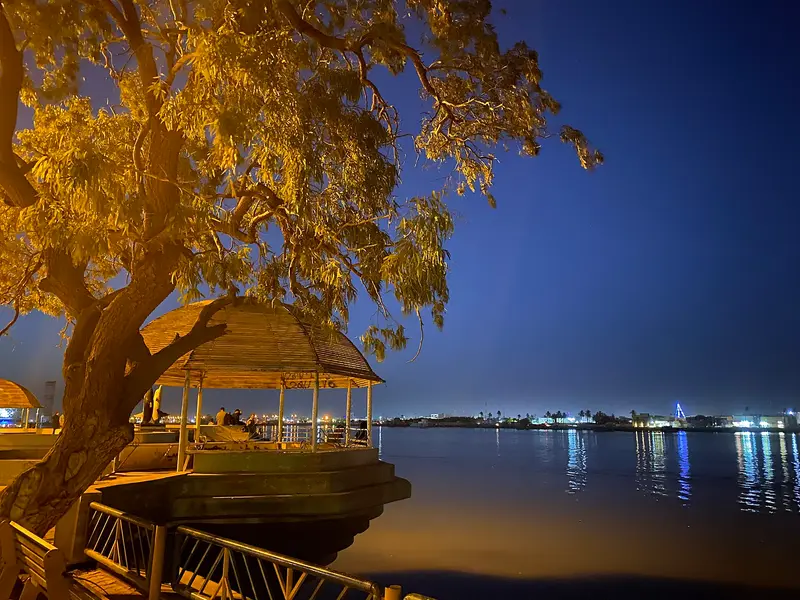
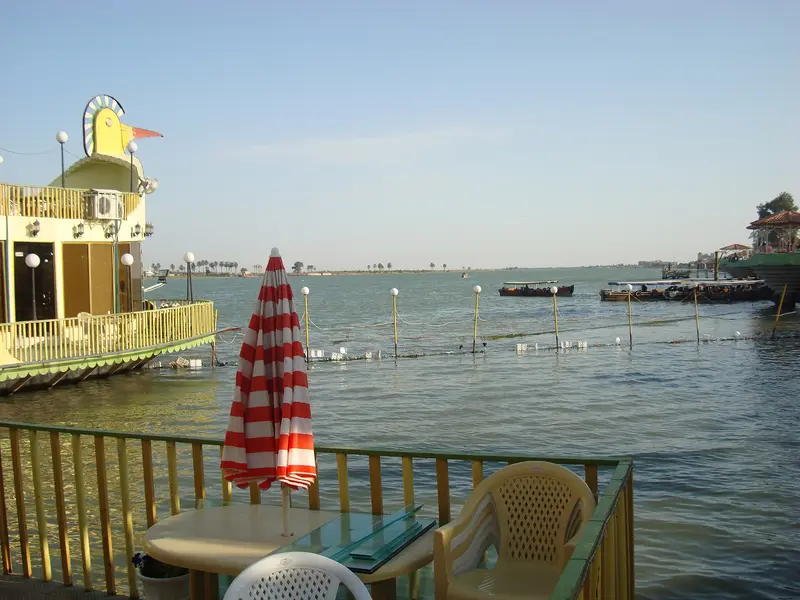
The most atmospheric setting is one of the floating restaurants moored along the Corniche and Ashar waterfront. Eating over the river, watching the water traffic in the evening light, while a whole carp is grilling a few metres away is as Basra an experience as exists. For a full overview of how these venues work and what to expect, see our floating restaurants guide.
These venues vary from fixed pontoon structures to more improvised setups. The quality of fish is generally fresher here because turnover is high. You will typically choose your fish from a tank or iced display before it is weighed and cooked.
Ashar grill houses
The historic Ashar district has a concentration of street-level grill restaurants where masgouf shares space with kebab and tikka. These are often smaller, faster, and slightly more budget-friendly than the waterfront venues. The atmosphere is informal; you may be eating on a plastic chair in an open-fronted shop. The fish is no less carefully grilled for it.
On pricing: No specific price data is available in our verified sources — check with the operator before sitting down. The standard practice at every masgouf venue in Basra is to agree on the price per kilogram of fish before it is cooked. Fish is priced by weight. Asking the price is not considered rude; it is expected. Skipping this step is the single most common mistake visitors make.
Cash is the norm at virtually all fish grill venues. The exchange rate at time of publication is approximately 1,310 Iraqi dinars to one US dollar (source: ExchangeRate-API). See our money in Basra guide for ATM and exchange information.
Other river and grill dishes worth ordering
If you want to eat beyond masgouf, or are at a table where others are ordering widely:
Simach (سمك) is the generic term for grilled fish. Smaller fish — including river species other than carp — are often grilled whole and served more quickly than masgouf. Ask what is fresh that day.
Kebab (كباب) in Basra is typically spiced minced lamb pressed onto flat skewers and grilled over charcoal. Many masgouf venues serve it as a side order or a second course.
Tikka is bone-in lamb or chicken pieces marinated and grilled. Lighter than kebab, often leaner.
These dishes tend to come with the same accompaniments — bread, salad, amba — so you are building a shared table rather than ordering individually.
Timing and etiquette
Dinner runs late in Basra. The main meal at grill restaurants is typically taken from around 8 pm onward, and venues stay busy well past midnight. If you arrive at 6 pm, you may find venues not yet at full operation. The prayer times reflect the rhythm: Maghrib prayer on 2026-07-16 is at 18:52 and Isha at 20:21 (source: Aladhan API); dinner moves seriously after Isha.
Practical checklist before you eat:
- Confirm the price per kilogram of fish before ordering.
- Ask to see the fish before it goes on the fire — fresh eyes and bright, red gills are good indicators.
- Carry Iraqi dinars in cash; card payment is not common at these venues.
- Allow two to three hours — masgouf cannot be rushed.
A note on river fish and water levels
The Shatt al-Arab and the broader river system feeding Basra have experienced significant stress in recent decades — reduced freshwater flow, increasing salinity, and pressure on fish stocks are documented environmental realities. Some species that were once abundant are now less commonly available.
Ordering masgouf is not something that requires an apology, but being a thoughtful diner means asking what fish is locally available and in season rather than insisting on a specific species if a venue indicates it is scarce. Vendors who are proud of their fish will tell you where it is from and what is freshest.
Vegetarian and lighter options
Masgouf venues are not vegetarian restaurants, but most tables will have enough plant-based food on them to eat a reasonable meal without fish:
- Flatbread with amba
- Tomato and onion salad
- Torshi (pickled vegetables)
- Plain rice (often available on request)
- Hummus at venues that serve it as a starter
If you are with a group and can flag your preference, the kitchen can usually put together a plate. Eating lighter at these venues — a kebab or simach rather than a whole fish — is also straightforward.
After the meal
The traditional close to a river-fish dinner is tea — sweet, black, served in small glass cups. Several venues along the Corniche have tea houses nearby, or the floating restaurants themselves serve tea on the water. For where to head next, the Corniche evening walk is the obvious continuation, and the Basra tea houses guide covers the next step in detail.
FAQ
Is masgouf only made with carp?
Carp (gattan in Iraqi Arabic) is the traditional fish for masgouf, and still the most common. However, other river fish — including shaboot and binni — are used depending on availability. Ask your vendor what species is on offer.
How much fish should I order per person?
A reasonable estimate is around 500–700 grams of whole fish per adult when the fish is being shared alongside bread, salad, and sides. Because fish is priced by weight before cooking, agree the total weight — and price — before it goes on the fire.
Can I visit these venues for lunch?
Some grill houses in Ashar open from midday. Floating restaurants on the Shatt tend to be primarily evening operations. Check with the specific venue; operating hours are not standardised across the city.
Do I need a reservation?
At most venues, no. You arrive, choose a table, select your fish. During busy evenings — particularly weekends and public holidays — the waterfront restaurants can fill early. Arriving by 7–8 pm gives you more choice.
Is it acceptable to ask for the fish to be deboned before serving?
You can ask, and many venues will do a rough debone before plating. The flesh is flaky and the bones are relatively large, so most experienced eaters work around them at the table. Children and first-timers can reasonably request a cleaner plate.
Getting to the waterfront: See getting around Basra for transport options, and hiring a private driver if you want a fixed arrangement for the evening. For the broader picture of planning your time in the city, your first 24 hours in Basra is a practical starting point.