

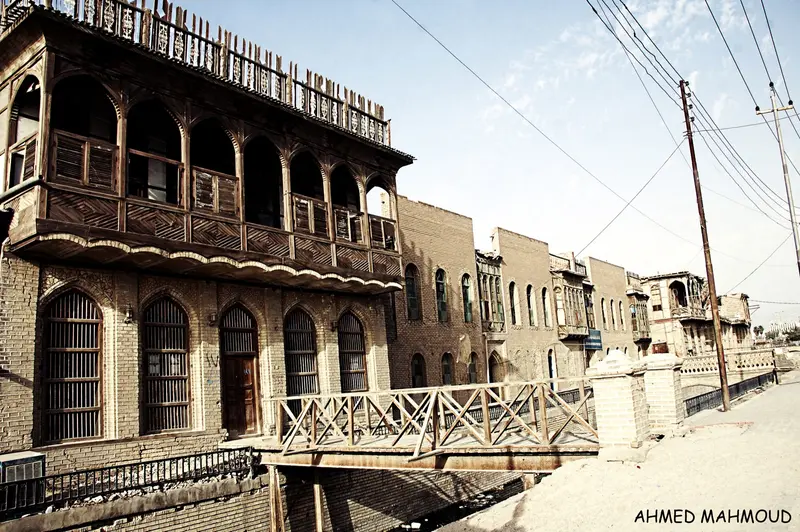
Old Basra and the Shanasheel: The Historic Quarter
Basra’s shanasheel — the intricately carved wooden bay windows and balconies that overhang the lanes of the old city — are the clearest surviving trace of the merchant wealth that shaped this port city before the oil era. If you have any interest in vernacular architecture or urban photography, the historic quarter warrants at least half a day. This guide explains what you’ll find, how to walk it, when to go, and how to behave respectfully among residents who still live in many of these buildings.
What the Shanasheel Actually Are
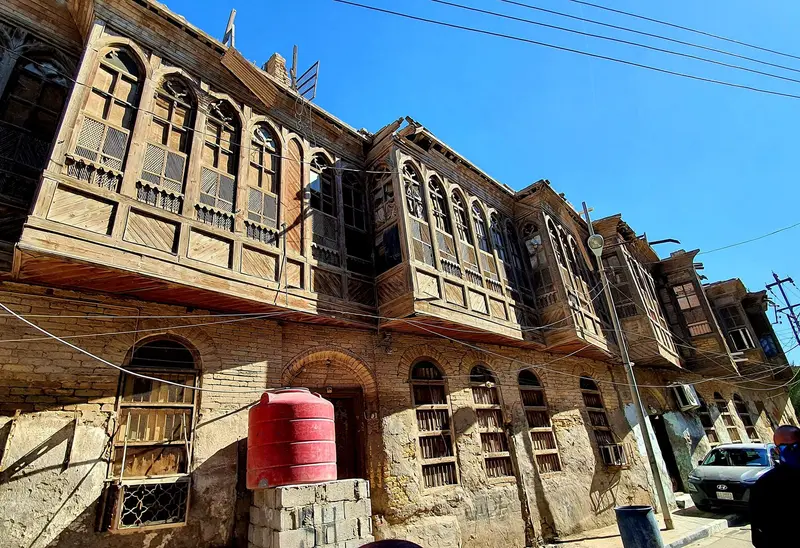
The word shanasheel (شناشيل) refers to the projecting enclosed balcony or oriel window built from elaborately latticework-carved timber. The form was common across the Gulf, southern Iraq, and the Arabian Peninsula in the 18th and 19th centuries, and Basra’s version developed its own character: deep overhangs designed to catch the prevailing shamal (north-west) wind, screens that allowed women inside to see the street without being seen, and facades that announced a merchant family’s status as directly as any business card.
The pre-oil city was a trading entrepôt — dates, wool, pearls, and later cotton moved through its wharves, and the houses of the Ashar and Margil quarters were built by families who profited from that trade. When oil revenues and modernisation arrived, concrete replaced timber and many families relocated. The shanasheel district contracted dramatically. What remains is a fraction of what once stood, and much of that remainder is in varied states of decay and active restoration.
You are not visiting a museum. You are walking through a living, if reduced, neighbourhood where some structures are stabilised, others are occupied but fragile, and a few are actively being worked on by preservation teams.
A Walking Route Through the Quarter
The surviving concentration of shanasheel houses sits primarily in and around the Ashar district, which also borders Basra’s commercial waterfront. The quarter is compact enough to cover on foot; the lanes are narrow, often unpaved or with uneven stone surfaces, and they do not follow a grid.
A practical approach:
-
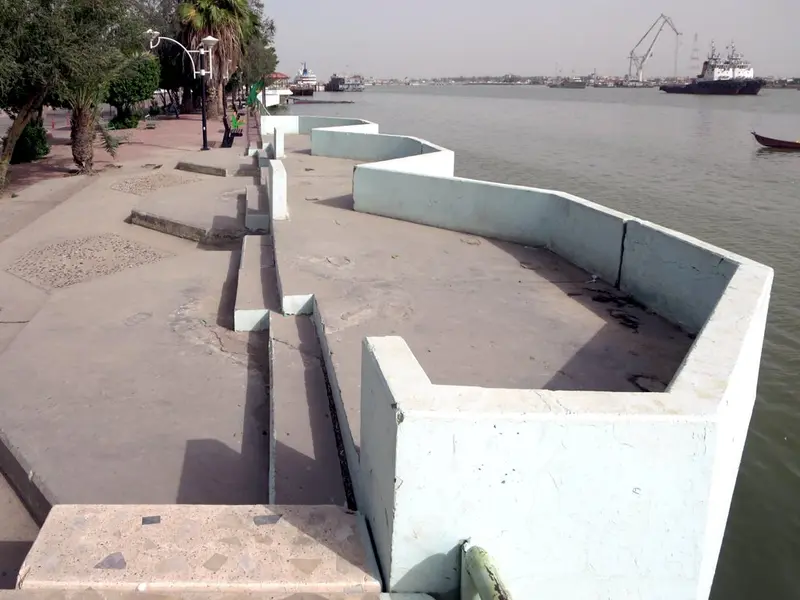
Start at the waterfront edge of Ashar. The Shatt al-Arab provides orientation and the transition from the broad corniche into the tight lane network is immediately legible. You will notice the change in scale within a few metres.
-
Move inward through the residential lanes. Look upward — the shanasheel are above street level, often two or three storeys up, so the street view is the primary experience. Notice the variation in carving density: some facades are relatively plain, others have screens covering the full projection with geometric or floral motifs.
-
Note the restoration work in progress. Some buildings have scaffolding or replacement timber panels alongside original sections. The contrast is useful for understanding what the originals looked like when maintained. Do not enter scaffolded buildings.
-
Continue toward the Ashar clock tower area to complete a loop before returning to the waterfront or continuing to the Basra Museum, which contextualises what you have seen.
There are no established waymarked trails or numbered stops. Ask locally — a guesthouse, hotel concierge, or the museum — whether any guided walks are currently organised, and verify which specific streets have access on the day you visit, as restoration activity can restrict movement.
The Best Light for Photography
Friday morning is the single best time to photograph the shanasheel. Commercial activity in the surrounding streets is reduced, traffic through the lanes is minimal, and the quality of light in the early hours — particularly in the hour after sunrise — throws the carved timber into sharp relief without the harsh midday shadows that flatten texture.
Sunrise in Basra in July is at approximately 04:58; in winter months it falls after 07:00, which is more practical for most visitors. July highs are forecast at 46–51 °C this week, so genuinely early starts are not just aesthetic preference — they are practical necessity. By 09:00 in summer the light is already harsh and the heat significant.
Golden hour before Maghrib (sunset prayer at 18:52 on 18 July) offers a second window: warm directional light on the western-facing facades and a cooler temperature than midday. The Asr prayer at 15:33 marks the point when the afternoon begins to moderate; the two hours before Maghrib are productive.
Photographing the Quarter Respectfully
The shanasheel district is not a photo set. Families live behind these facades, and some residents are understandably wary of cameras directed at their homes or, more pointedly, at themselves.
Practical rules:
- Ask before photographing any person. Make eye contact, gesture at your camera, wait for a nod. If you get a shake of the head, accept it without protest.
- Photograph architecture, not interiors through open doors. Many doors are left open for ventilation. This is not an invitation to photograph inside.
- Keep your camera lowered when walking past windows at ground level where women may be present.
- Engage, don’t just extract. A greeting (salam alaykum) and a moment of acknowledgement before raising your camera changes the dynamic entirely.
- If someone asks you not to photograph their building or home, comply. There is no recourse and no argument worth making.
Restoration and Preservation Status
Efforts to document and stabilise the surviving shanasheel houses have been ongoing in various forms for years, involving Iraqi government bodies, international architectural organisations, and local advocates. The pace and scope of work shifts depending on funding and access agreements.
Do not assume any specific building is open, closed, or accessible based on information more than a few weeks old. Verify on arrival — ask at the Basra Museum, check with your accommodation, or speak to the workers you will likely see at active sites. What is scaffolded today may be open in three months; what was accessible last year may now be fenced.
This is not a criticism of the preservation effort — it is simply the reality of working on historic fabric in a living urban environment. Plan flexibility into your visit.
Combining With Nearby Attractions
The historic quarter pairs naturally with two nearby destinations:
- The Basra Museum sits close to the waterfront and provides archaeological and cultural context that makes the architecture more legible. Visit it before the quarter if you want the conceptual framework first, or after if you prefer to arrive with fresh eyes. See our first 24 hours guide for how to sequence both.
- The Ashar commercial district immediately adjoins the historic lanes and gives you a clear contrast between the layered older fabric and 20th-century commercial development.
For a fuller day, the Mesopotamian Marshes are reachable from Basra and offer a completely different aspect of the region’s heritage, though that requires separate transport planning.
Getting There and Practicalities
The historic quarter is within the urban core and reachable by taxi from most accommodation. There is no single “entrance.” Discuss the destination with your driver using “Ashar” as the neighbourhood name and ask to be dropped at the waterfront edge.
See getting around Basra for taxi and ride-app options.
Footing in the lanes is uneven. Wear closed shoes with good grip — sandals are a poor choice on broken paving. Some lanes are narrow enough that two people cannot pass a parked vehicle comfortably.
Modest dress is appropriate for both men and women visiting a residential neighbourhood. For women, a headscarf is not legally required but is respectful and reduces unwanted attention.
Carry cash in Iraqi dinars. There are no ticket desks, entry fees, or card readers in the quarter itself. The current rate is approximately 1,309 IQD to 1 USD — see money in Basra and Basra ATM and exchange rates for practical guidance.
When Not to Expect Much
- Midday in summer. July highs this week reach 49–51 °C. Walking stone-paved lanes with no shade between 10:00 and 16:00 is not productive for photography and is physically demanding.
- During major religious observances. Access and atmosphere change. Check locally before planning a visit around Eid or Ashura.
- When specific buildings are under active restoration. You may arrive to find the most photogenic facade entirely obscured by scaffolding and tarpaulins. This is unpredictable. Accept it as the cost of the preservation work actually happening.
Frequently Asked Questions
Do I need a guide to visit the shanasheel quarter? You do not need a guide to walk the public lanes. A local guide adds value if you want access to specific buildings, context about individual houses, or introductions to residents. Check with the Basra Museum or your accommodation about whether guided walks are currently offered — do not assume they are or are not.
Can I enter the old houses? Some are occupied private residences — do not enter without an explicit invitation. A small number may be accessible as part of restoration projects or informal guided arrangements. Verify access on the ground; do not rely on online information about specific buildings being open.
What should I do if a resident approaches me? Greet them, explain briefly that you are visiting to see the architecture, and follow their lead. Most encounters will be neutral or welcoming. If asked to leave a particular spot, do so without argument.
How long should I allow? Two to three hours covers the core area at a reasonable pace for photography. Add time for the Basra Museum if you plan to combine both. A full morning from before sunrise to around 09:00 in summer is optimal.
Is the quarter suitable for people with limited mobility? The lane surfaces are uneven and there are no ramps or accessibility adaptations. It is not practically accessible for wheelchair users or anyone who cannot manage cobbled, broken, or unpaved surfaces.