
Visiting the Basra Museum in the Former Palace
The Basra Museum sits inside the Lakeside Palace, a former residence of Saddam Hussein built in 1990 on the banks of the Shatt al-Arab. It is now Iraq’s second-largest museum — after the National Museum in Baghdad — and holds around 440 artefacts spanning Mesopotamian, Babylonian, and Persian civilisations alongside the history of Basra itself. If you are planning a visit, read on for what to expect, how to get there, and the practical details you need.
What the Museum Is
The Lakeside Palace was handed over to Iraqi authorities as part of the British Army’s withdrawal from Basra, having previously been used as an operational centre. It opened to the public as a museum in September 2016 with a single gallery dedicated to antiquities from the southern Basra region. Three further galleries — Sumer, Assyrian, and Babylon — opened in March 2019, funded by a £530,000 grant from the UK government’s Cultural Protection Fund administered by the British Council. That expansion quadrupled the display space and established the museum as a serious regional institution.
The compound itself covers 85 hectares, is enclosed by walls along the Shatt al-Arab, and is intersected by Saraji Creek with artificial lakes throughout. A natural history museum sits nearby within the same compound, and longer-term plans envisage a wider cultural park on the site.
What You Will See
Four gallery rooms are open to visitors: Sumerian, Babylonian, Assyrian, and the Basrah gallery. The collection of approximately 440 displayed items includes coins, pottery, statues, and cuneiform clay tablets, with artefacts dating back to around 300 BC. The Basrah gallery covers the city’s own history rather than ancient Mesopotamia, giving a sense of Basra’s role as a port and trade hub.
The museum also holds a library of approximately 3,000 books donated by the British Institute for the Study of Iraq — useful context if you want to read further after your visit. Exhibit labels appear in both English and Arabic, so non-Arabic-speaking visitors can follow the collections without a guide.
The museum attracts around 50,000 visitors a year, many of them school groups, so weekday mornings can feel busy with organised parties. Plan accordingly if you prefer a quieter atmosphere.
Opening Hours and Tickets
Reported opening hours are 8 am–2 pm, closed Fridays and Saturdays, but museum schedules in Basra can change without notice. Verify the current hours and any ticket requirements directly with the museum or through official local channels before you travel — do not rely on any single source including this one. Admission pricing is not confirmed in any data available to us; check with the operator on arrival or in advance.
At the current exchange rate of approximately 1,312 Iraqi dinars to one US dollar, even a paid entry fee would likely be modest in international terms — but confirm the figure on-site.
Getting There
The museum is located approximately 3 km south-east of Basra’s historic city centre, on the western bank of the Shatt al-Arab. The compound is accessible by road; a private taxi or ride-hail app is the most straightforward option from central Basra. Agree a fare before you depart or confirm the app price.
See Getting Around Basra for a full breakdown of local transport options including taxis, apps, and minibuses. If you have just arrived in the city, Basra Airport Arrival Guide covers the journey in from the terminal.
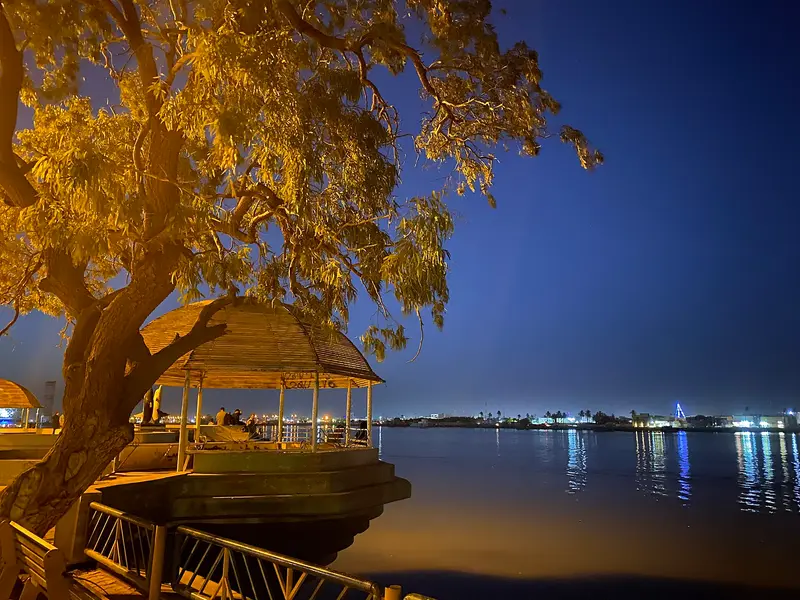
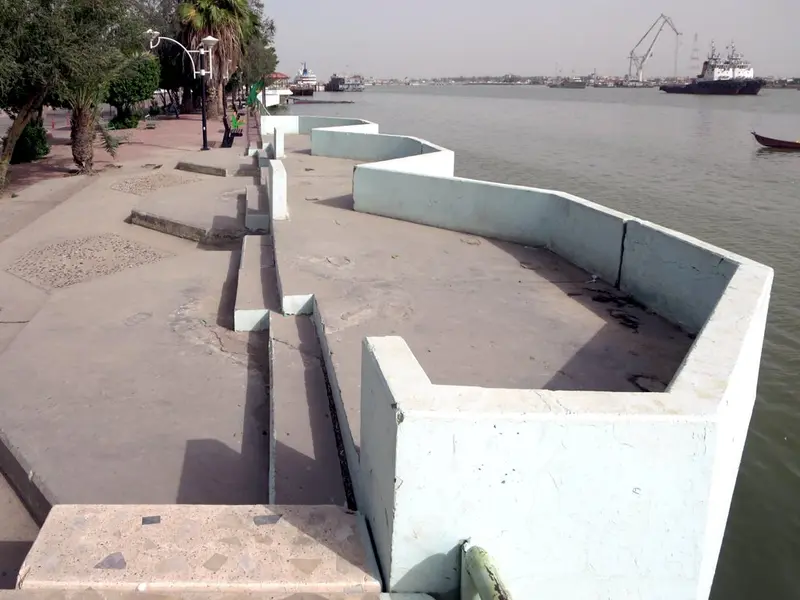
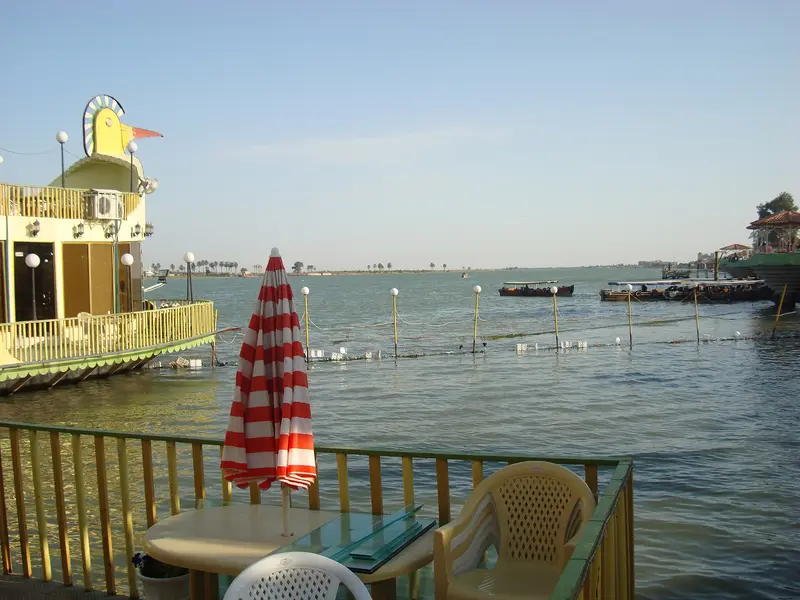
The waterfront setting means that combining a museum visit with a walk along the Shatt al-Arab or a broader look at the city’s corniche area is straightforward — see Basra Corniche and Neighbourhoods for what else is nearby.
How Long to Allow and Best Time to Visit
Most visitors spend between one and two hours inside the four galleries. If you want time to explore the palace grounds and the lakeside setting outside, allow closer to half a day.
Timing matters a great deal here. August highs in Basra are currently forecast at 49–50 °C, with overnight lows above 34 °C — some of the most intense heat on the planet at that time of year. The museum building is air-conditioned, making it a reasonable midday activity, but the walk between a taxi and the entrance and any time outdoors in the compound will be punishing in summer. November through March, when average highs drop to the 18–26 °C range, is far more comfortable for any outdoor element of the visit.
If visiting in summer, aim to arrive close to the 8 am opening to minimise time in the heat, and note that Dhuhr prayer is at 11:55 and Asr at 15:33 — brief pauses in activity may occur around these times.
Photography Inside the Museum
Photography rules vary between Iraqi museums and can be enforced differently by individual staff. Ask on arrival whether photography is permitted in each gallery, and whether flash or tripod use requires separate permission. Do not assume a general rule applies.
Combining with Old Basra and the Shanasheel District
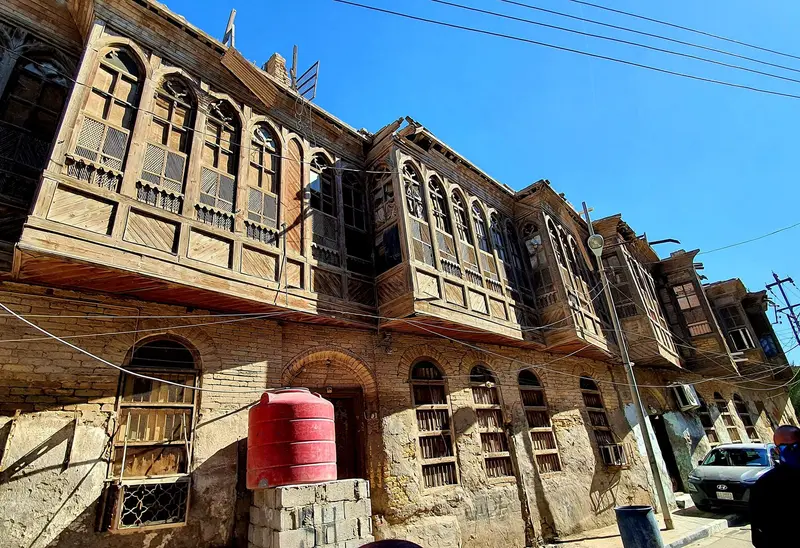
The museum pairs well with a visit to the Old Basra area, where the traditional wooden shanasheel (projecting latticed windows) on historic houses represent a very different layer of the city’s architectural history. See Basra Corniche and Neighbourhoods for orientation around those areas.
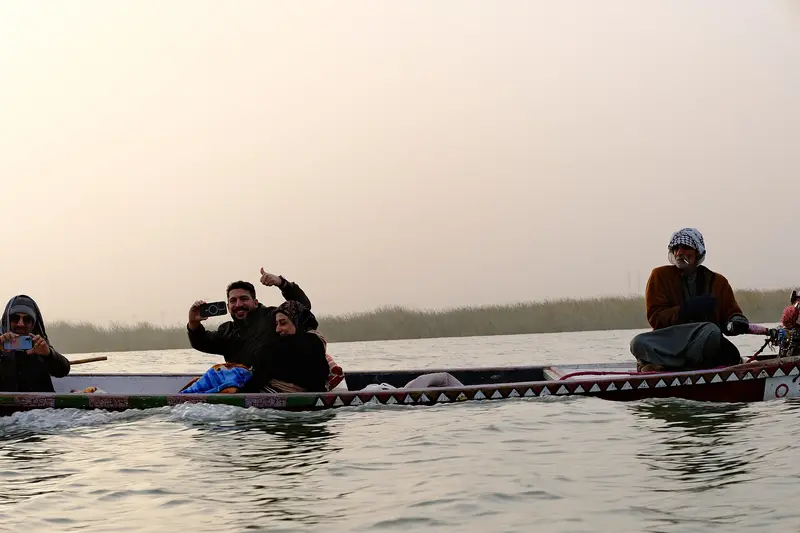
For the broader marshlands context — the wetlands that supplied much of the Mesopotamian world the museum documents — Mesopotamian Marshes from Basra covers day trips to the UNESCO-listed wetlands south of the city.
Accessibility and Facilities
The Lakeside Palace is a large building and the compound grounds are extensive. Specific information about wheelchair access, ramps, accessible toilets, or facilities for visitors with other needs is not confirmed in available data — contact the museum directly before your visit to check what is in place. Bring water, especially in warmer months, as on-site café or vendor availability is not confirmed.
Practical Checklist
- Confirm opening hours and closure days before visiting — do not assume the 8 am–2 pm schedule is current
- Ask about ticket prices on arrival; check with the operator in advance if budgeting matters
- Photography: ask each gallery attendant individually
- Wear covered shoulders and knees as a courtesy in a public cultural institution
- Arrive by taxi or private car; confirm the route to the Lakeside Palace compound specifically
- In summer, plan your outdoor exposure carefully given temperatures above 49 °C
For money and payments in Basra, see Money in Basra. If this is your first day in the city, First 24 Hours in Basra gives a broader orientation.
Frequently Asked Questions
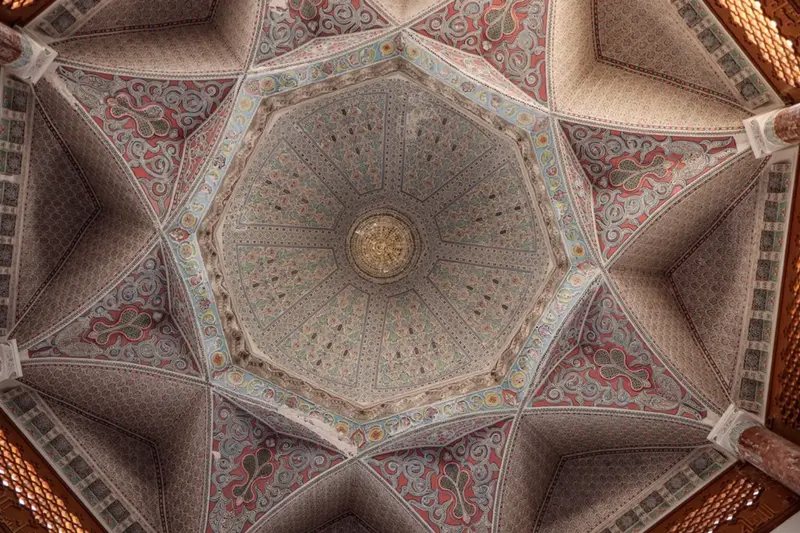
Is the Basra Museum worth visiting even for a short stay? Yes — it is Iraq’s second-largest museum, the palace building is architecturally striking, and the Mesopotamian collection is genuinely substantial. Even a 90-minute visit covers all four galleries.
Do I need to book in advance? No advance booking system is confirmed in available data. Check with the museum directly whether group visits require prior arrangement.
Are the exhibits labelled in English? Yes. Exhibit labels are in both English and Arabic, so you can follow the collections without a guide or translator.
What should I do if the museum is closed when I arrive? Hours can change without public notice. If the museum is closed, the Shatt al-Arab waterfront nearby is walkable, and the corniche area offers an alternative use of the time. See Basra Corniche and Neighbourhoods.
Can I visit the natural history museum in the same compound? A natural history museum is located nearby within the 85-hectare compound. Whether it is open to general visitors on the same ticket or separately, and what its current hours are, is not confirmed — ask on arrival at the main museum entrance.