




Marsh Bird Watching in Iraq: Species, Seasons & Tour Operators
The Mesopotamian marshes — a UNESCO World Heritage landscape fed by the Tigris and Euphrates — sit on one of the world’s great bird migration flyways. Whether you are chasing winter flocks of waterbirds, spring passage migrants pausing for fuel, or summer-breeding reed specialists, the marshes deliver remarkable variety. The practical starting point for any visit is Basra, the nearest city with international air links and accommodation.
Migratory Bird Seasons: When to Go
The marshes experience four distinct ornithological windows across the year. Understanding them lets you plan the right trip for the birds you most want to see.
Spring Passage (March – Early May)
Spring is widely considered the most rewarding period for sheer species diversity. Northbound migrants from Africa and the Arabian Peninsula move through the Tigris–Euphrates corridor, using the marshes as a critical refuelling stop. Waders, raptors, and passerines that would not normally breed here appear in concentrated numbers. Weather is warm but manageable: monthly normals show highs around 26 °C in March rising to 39 °C in May, with minimal rainfall (18 mm in March, 4 mm in May). Early mornings — particularly around and after Fajr (currently 03:43) and sunrise (05:11) — are the most productive hours for active feeding.
Autumn Passage (September – November)
The return migration brings a second peak, often with juveniles in fresh plumage that are useful for ageing and identification practice. October normals average 36 °C highs and just 3 mm of rain; by November that drops to 26 °C with 19 mm, making conditions increasingly comfortable. Waterfowl numbers build quickly as northern breeding grounds cool.
Winter Residents (December – February)
The marshes host substantial wintering populations of ducks, geese, and wading birds, many originating from Central Asia and Siberia. January normals average 18 °C highs and 7 °C lows with 32 mm of rain — cold by local standards but tolerable for birding when layers are carried. This is a quieter travel period and the best window if you want extended time on the water without summer heat.
Summer Breeding Season (May – August)
Summer is challenging from a comfort standpoint: August forecasts show highs of 49–50 °C across the coming week, and monthly normals for July and August reach 46 °C. Despite the heat, this is the only season to observe marsh-breeding residents on the nest. Early morning starts (around sunrise at 05:11 in August) and limiting fieldwork to the first two to three hours of daylight are essential. Insist that any operator provides fully shaded boat cover and sufficient drinking water.
Key Species to Look For
Because the data fields for specific species and endemics were not independently verified, the following reflects the well-documented ornithological profile of the Mesopotamian marshes available in published literature — confirm current sightings lists with your operator before travel.
Herons, Egrets, and Ibises
The reed beds and open shallows support multiple heron species year-round, including Grey Heron and Purple Heron. Great White Egret and Little Egret are common. The Glossy Ibis occurs on passage; check current marsh lists with operators for confirmation of resident versus visitor status.
Eagles and Raptors
The marshes and surrounding agricultural land attract various raptors on passage. Eastern Imperial Eagle and Greater Spotted Eagle have been recorded; Marsh Harrier quarters reed edges regularly. Osprey appear during both passage windows.
Reed and Marsh Warblers
The Basra Reed Warbler — named directly for this region and considered one of the most locally significant species — breeds in the reed beds in summer. Identifying it requires experience; a specialist guide with audio playback is strongly recommended for reliable detection. Several other Acrocephalus warblers occur on passage.
Waterfowl and Waders
Winter months bring Ferruginous Duck, Common Pochard, and Tufted Duck. Wader diversity peaks in spring and autumn with multiple sandpiper and plover species using muddy margins. Flamingo flocks are periodically reported at suitable shallow sites.
Tour Operators with Ornithology Expertise
Specialist tour operators who combine ornithology knowledge, appropriate watercraft, and binocular or spotting-scope hire for serious bird watchers are the key logistical component of a marsh birding trip. Check with the operator / official site for current availability, pricing, group sizes, and what optics or camera equipment is provided.
When evaluating operators, ask specifically:
- Do guides hold ornithological qualifications or published species lists?
- Is the boat slow enough and quiet enough for photography?
- Are fixed hides or photography blinds at any sites accessible on the itinerary?
- What is the group size limit? (Smaller is better for birds and photography.)
- Can the operator adjust departure times to match pre-dawn starts?
For broader context on reaching and exploring the marshes from Basra, see our full overview at Mesopotamian Marshes from Basra.
Photography Blinds and Viewing Platforms
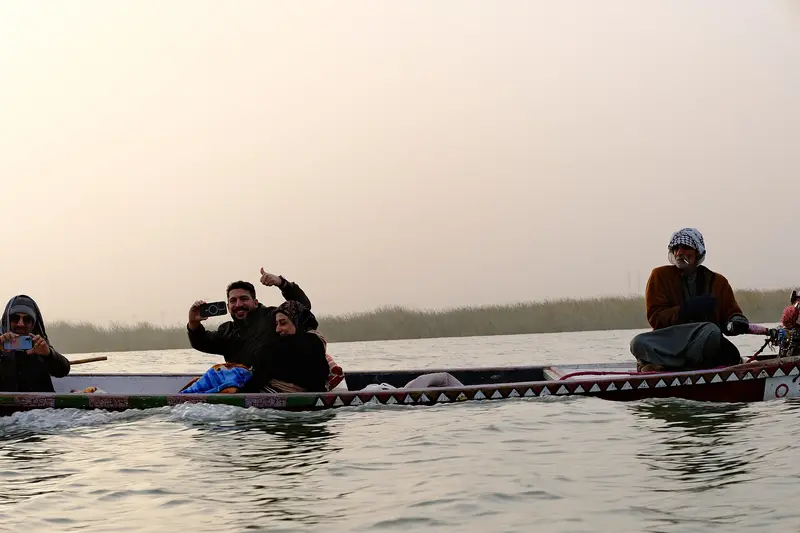
Fixed photography infrastructure in the Mesopotamian marshes — dedicated hides, elevated platforms, or permanent blinds — is not uniformly documented in independently verified sources. Check with the operator / official site for current locations and access conditions. In many areas, a slow-moving traditional mashuf (wooden boat) piloted by an experienced local serves as the primary viewing platform, allowing approach angles that fixed hides cannot offer.
If photography is your primary goal, discuss the following with operators before booking:
- Boat type: A lower, quieter wooden mashuf typically allows closer approach than motorised alternatives.
- Engine-off drifting: Good operators cut the engine well before a target species and allow the boat to drift into position.
- Lighting angles: Identify which reed-bed channels offer morning or afternoon light, depending on subject orientation.
- Blind hire: Some community-run ecotourism initiatives have constructed simple hides; confirm availability and booking process directly.
Packing Checklist for Marsh Birding
Optics
- Binoculars: 8×42 or 10×42 are standard for open marsh conditions
- Spotting scope and tripod for distant waders and duck flocks in winter
- Camera: Long lens (400 mm equivalent or greater) for reed-bed specialists
Field Guides
- A regional guide covering the Middle East and Central Asian migrants is essential
- Download offline bird-call apps before departure; mobile data in remote marsh areas may be limited
Sun and Heat Protection
- High-factor sunscreen (reapply after boat spray)
- Wide-brim hat and long-sleeved UV-protective clothing
- Electrolyte sachets or tablets for summer visits
Insect Repellent
- DEET-based repellent is recommended for reed-bed work, particularly dawn and dusk
- Cover exposed skin; mosquitoes are active in warm months
General Logistics
- Cash in Iraqi dinars: the current rate is 1,311.99 IQD per USD (as of 8 August 2026). For more on money matters, see Money in Basra.
- Confirm accommodation in Basra before travel; see Where to Stay in Basra.
- Allow time on your first day for orientation; First 24 Hours in Basra covers the basics.
- Getting from Basra to marsh entry points requires local transport; see Getting Around Basra.
- If arriving by air, plan logistics from the terminal at Basra Airport Arrival Guide.
FAQ
When is the single best month for marsh bird watching?
No single verified peak month is listed in current operator data. Most published ornithological accounts point to March–April for species diversity during spring passage, and November–January for large wintering flocks. Check with the operator / official site for the most current sighting records before committing to specific dates.
Do I need a specialist guide, or can I bird independently?
Independent birding in the marshes is logistically difficult: watercraft access, local knowledge of channels, and the ability to communicate with landowners all require local support. A specialist guide also dramatically improves your chances of locating target species such as the Basra Reed Warbler.
What currency and payment methods do operators accept?
Most small and mid-range marsh tour operators work in Iraqi dinars cash. Some larger operators may accept USD. The current exchange rate is 1,311.99 IQD per USD. Confirm payment methods directly with your operator before travel.
Can I combine marsh birding with other Basra attractions?
Yes. Basra has museums, the historic waterfront, and food culture worth a day or two. See Basra Museum and our First 24 Hours in Basra guide for practical ideas on structuring a combined itinerary.
Are prayer times relevant to birding schedules?
Yes — practically. The best birding hours (pre-dawn to mid-morning) overlap with Fajr and morning prayer. Today’s Fajr is at 03:43 and sunrise at 05:11. Operators familiar with ornithological fieldwork typically plan departures to align with first light. Confirm the daily schedule with your operator, and be aware that Friday midday schedules may differ.