
Where to eat in Basra: food scene guide
Basra’s eating scene is built around the Shatt al-Arab waterway, open charcoal grills, and a sweet-tea culture that runs from early morning to well past midnight. River fish is the centrepiece, grills dominate the evening streets, and neighbourhood juice stands and tea houses fill almost every gap in between. Eating here is largely casual, almost entirely halal by default, and still meaningfully affordable even as the city grows.
The shape of Basra dining
Basra dining does not follow a single style. It layers several distinct traditions on top of each other:
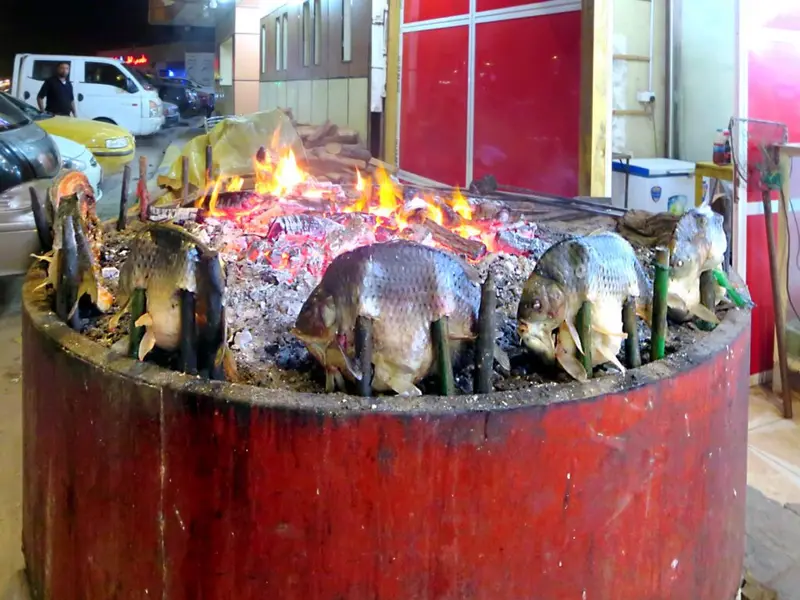
- River fish and masgouf — whole carp split, marinated, and slow-grilled over tamarind-wood embers. This is the dish Basra is proudest of, and it appears on both floating restaurant menus and neighbourhood grill-house boards.
- Grills (mashawi) — lamb chops, kofta, chicken tikka, and offal, cooked over open charcoal and served with flatbread, pickles, and tomatoes. Grill houses range from plastic-chair street stalls to proper air-conditioned restaurants.
- Tea houses (chaikhanas) — a social institution rather than a food destination. Strong, cardamom-scented black tea arrives in small glasses; light snacks, bread, or eggs may be available. Hours run from before dawn into the early hours.
- Juice stands — especially dense in the Ashar district. Fresh pomegranate, orange, and sugar-cane juices are standard; mixed fruit blends are common. These are cash-only counter operations.
- Sweets and pastries — baklava, zlabia, and Basra’s famous dates in many processed forms. Sweet shops double as take-home gift stops.
By area: where to eat in each neighbourhood
Floating restaurants on the Shatt al-Arab
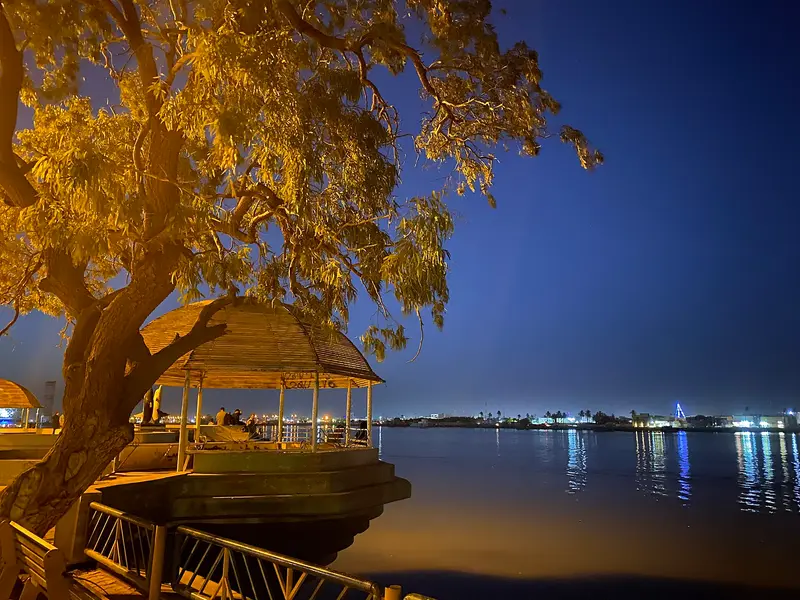
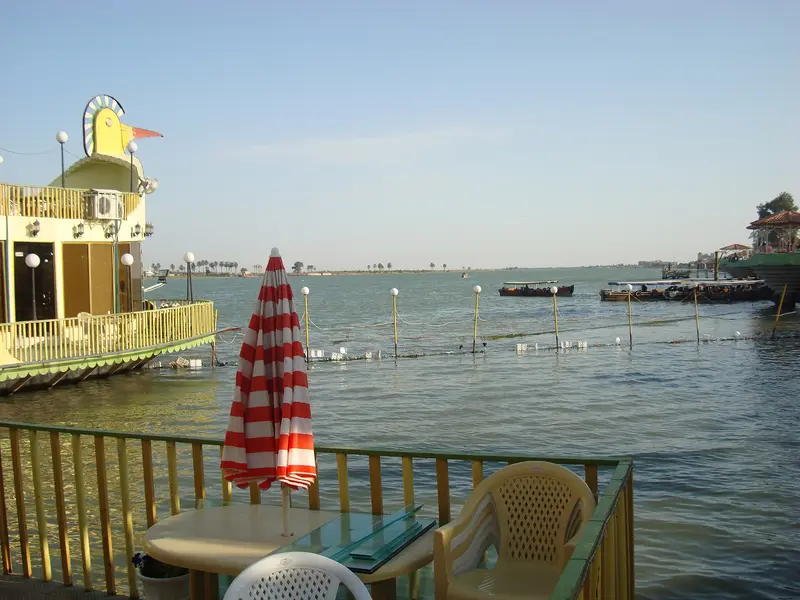
A small cluster of boat and pontoon restaurants moor along the Shatt al-Arab, most prominently near the Corniche and the older Ashar reaches of the waterfront. The format is consistent: you choose your fish from a display, agree a weight and price before cooking begins (this step matters — confirm the total before you commit), then wait 30–45 minutes while it grills over an open fire on deck or at the water’s edge. Evening is the prime window, when the heat eases and the waterway reflects city lights. Check with each operator for current hours, mooring locations, and whether reservation is needed on weekends and public holidays.
Ashar: grills and juice stands
Ashar is Basra’s oldest commercial district and still its most animated street-food quarter. The main commercial streets are lined with grill houses that start firing up around late afternoon and peak after Maghrib prayer (18:51 today, per current prayer times). Juice stands operate from mid-morning. Ashar is best navigated on foot — getting around Basra covers the practical logistics of moving between districts.
Corniche cafes
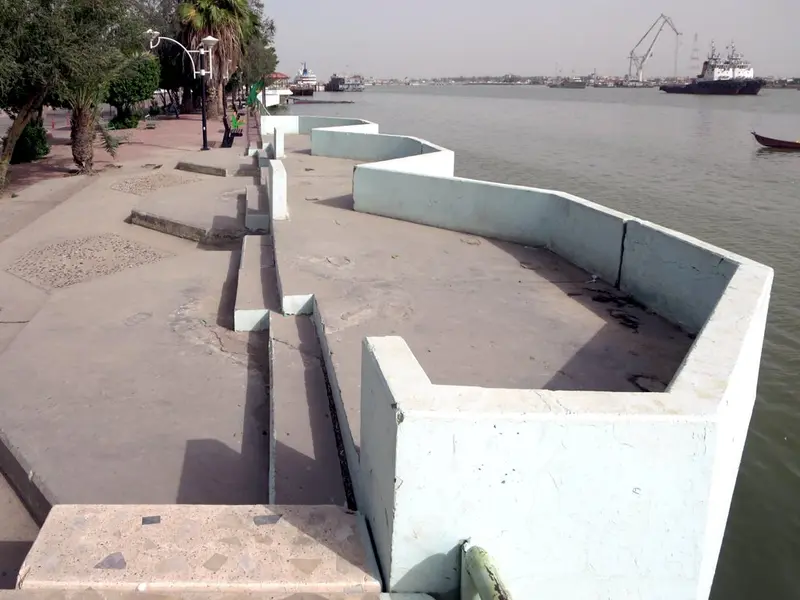
The waterfront Corniche hosts a newer generation of cafes — some with air conditioning, shaded terraces, and a menu that extends beyond tea into sandwiches, pastries, and soft drinks. These venues attract families in the evening and are quieter at midday, particularly during summer when temperatures regularly exceed 46 °C (today’s forecast high is 50.5 °C, per Open-Meteo). If you are visiting in July or August, plan eating out for after sunset and carry water for any time spent walking between venues.
What to order: first-timer priorities
Masgouf is the non-negotiable first meal. A full guide to ordering, pricing expectations, and what distinguishes good preparation from average is in the masgouf guide — read it before you sit down so you know to confirm weight and price upfront.
Beyond masgouf:
- Tashreeb — slow-braised lamb over torn flatbread soaked in broth, common at lunch
- Pacha — sheep’s head and trotters, a breakfast staple at specialist shops open from very early morning
- Kleicha — date-filled shortbread biscuits, ubiquitous as a take-home item
- Gaymer — clotted cream served with bread and date syrup for breakfast
Meal rhythms: timing your meals
Basra eats late by many visitors’ standards. Lunch runs from roughly 13:00–15:00, but the main meal of the day tends to be dinner, which often does not begin in earnest until after Isha prayer (20:19 today). Street grill houses frequently run to midnight or beyond on weekdays, later on Thursdays and Fridays.
Fridays see the city’s family dining culture at full volume: floating restaurants and corniche venues fill early in the evening, and waits for popular spots lengthen considerably.
Ramadan inverts the rhythm entirely: almost all food venues close from before Fajr (03:25) until Iftar at sunset (Maghrib, 18:51). After Iftar, restaurants, sweets shops, and juice stands stay open very late. Ramadan dates shift annually — check the current Islamic calendar before planning a Ramadan visit.
Client-safe and business dining: calmer, reservable venues
If you are hosting colleagues or need a reliably quieter environment, the better-established Corniche restaurants and hotel dining rooms in the business district offer more predictable service, menus in English and Arabic, and the ability to book ahead. Check with the operator for reservation procedures and minimum group policies. The business district accommodation guide lists several hotels whose in-house restaurants are used regularly for this purpose. Where to stay more broadly is covered in where to stay in Basra.
Cash, tipping norms, and confirming prices
The Iraqi dinar (IQD) is the working currency for all food transactions. As of 19 July 2026, the rate is approximately 1,309 IQD to 1 USD (ExchangeRate-API). Street stalls and grill houses operate entirely in cash. Some hotel restaurants accept cards — confirm before ordering.
Confirm the price of fish and grills by weight before the food is prepared. This is the most common source of bill disputes for visitors. Pointing to the item and asking “cham?” (how much?) is understood everywhere.
Tipping is not obligatory but is common at sit-down restaurants. Rounding up or adding 5–10% at the end of a meal is a typical gesture at mid-range venues; street stalls do not expect it. Detailed guidance on cash, ATMs, and exchange is at money in Basra and Basra ATM and exchange rates.
Dietary notes
Halal by default: Basra is a Muslim-majority city and essentially all meat served in restaurants is halal-slaughtered. Pork is not present in the mainstream food supply.
Vegetarian: Not a widely labelled category, but rice dishes, lentil soups, flatbreads, salads, eggs, and bean-based preparations exist across the menu at most restaurants. Juice stands and sweet shops are naturally vegetarian. Tell the kitchen clearly if you need a fully meat-free preparation, as some broths are meat-based.
Allergies: Nuts (especially in sweets), sesame, and dairy appear frequently. Communication of specific allergies is best done in Arabic — bring a written card if your allergy is severe, as staff may not be familiar with cross-contamination protocols in the way visitors from other countries may expect.
Sweets and take-home dates
No meal in Basra is complete without something from the sweets quarter. Baklava, zlabia (fried dough in syrup), and mamoul (semolina-stuffed pastry) appear in every neighbourhood. Basra’s dates — harvested from the palm groves around the city — are available in dozens of varieties, sold fresh, dried, pressed into blocks, or stuffed with nuts. They make the most practical and meaningful edible souvenir from the city. For a deeper guide to what to buy and where, see the dates and sweets guide.
FAQ
Do Basra restaurants have English menus?
A minority of sit-down restaurants in hotel districts and on the Corniche offer English menus or can produce one on request. Street grill houses and tea rooms almost never do. A translation app with camera function is genuinely useful.
Is it normal to share dishes?
Yes. Most grill meals are structured for sharing — large platters of rice, multiple skewers, bread, and salads arrive together. Ordering for the table rather than individually is the norm in most contexts.
Can I eat at the floating restaurants without a reservation?
Generally yes for couples or small groups on weekday evenings, but check with the specific operator ahead of a Friday visit or if you have a larger group. Practices vary and change seasonally.
What is the current exchange rate for budgeting meals?
As of 19 July 2026: 1 USD = approximately 1,309 IQD (ExchangeRate-API). Keep IQD cash on hand — most food venues, including grill houses and juice stands, do not accept cards or foreign currency.
How does extreme summer heat affect eating out?
July and August highs regularly reach 46–50 °C in Basra (Open-Meteo forecast and monthly normals). Outdoor venues and grill houses become uncomfortable until after sunset. Plan accordingly: breakfast early, avoid outdoor meals midday, and shift dinner to the post-Isha window when the city comes alive.
For your first day in Basra with a clear eating plan already in mind, see first 24 hours in Basra.