
Basra Corniche: Neighbourhoods, Cafés & Riverside Dining
The Corniche is Basra’s main public gathering space — a riverside promenade along the Shatt al-Arab waterway where families, friends, and visitors come together in the evenings to eat, drink tea, smoke shisha, and watch the water. If you want one place to orient yourself in the city and see how locals actually spend their leisure time, this is it.
How the Corniche Is Laid Out
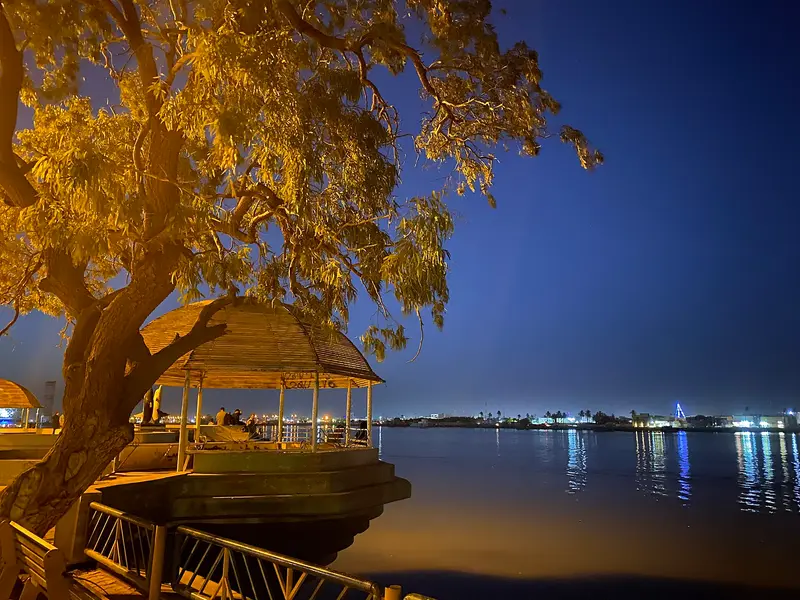
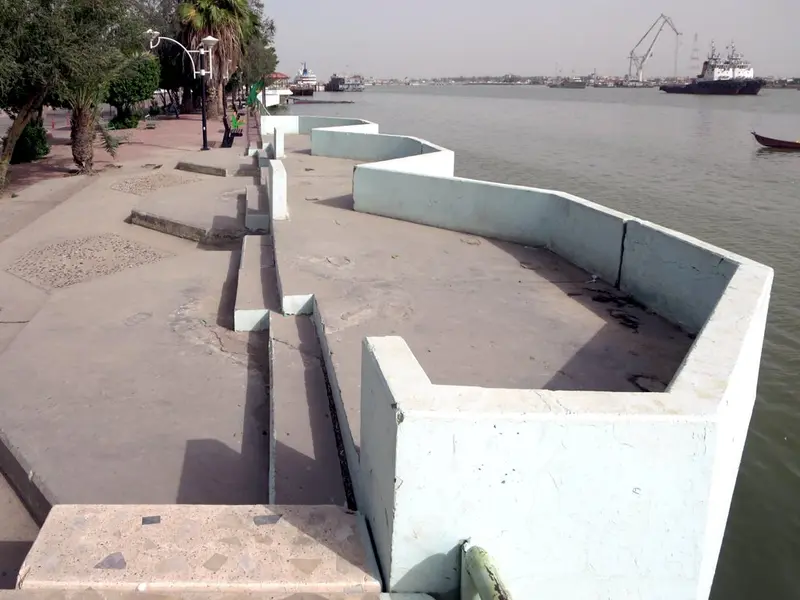
The Basra Corniche runs along the western bank of the Shatt al-Arab. Rather than a single uniform strip, it is a sequence of distinct zones that flow into one another — each with a different atmosphere, age group, and purpose.
Al-Ashar and the Northern Stretch
The northern section, around the historic Al-Ashar district, is the busiest and most commercially active part of the waterfront. The old Al-Ashar Creek feeds into the Shatt al-Arab nearby, and the surrounding streets have been a trading hub for generations. Here the Corniche feels urban and dense: tea houses, juice vendors, and small restaurants line the promenade, and pedestrian traffic is steady from late afternoon onward.
This section connects easily on foot to Al-Ashar’s bazaars and the traditional boat-building yards a short walk inland — worth a look if you want context beyond the waterfront itself.
5th May Park and the Central Section
Further south, 5th May Park (also written as Khamis Ayar Park) is the most family-oriented section of the Corniche. It has paved walking paths, green space, children’s rides, and benches facing the water. This is the part of the Corniche most local families head to in the evenings, particularly on Thursdays and Fridays. Vendors sell corn, snacks, and cold drinks from carts along the paths.
The park area becomes noticeably more crowded on weekends and public holidays. If you want a quieter walk, the stretches just north or south of the main park see less foot traffic.
The Southern Promenade
South of the main park, the Corniche becomes quieter and more residential. Some of the newer riverside restaurant clusters are located in this area. The view of the water is wider here, and on clear evenings you can watch cargo and passenger vessels moving along the Shatt al-Arab.
Cafés and Shisha Lounges
Traditional qahwas (tea houses) and shisha lounges are the social backbone of the Corniche. Most open in the late afternoon and stay busy well past midnight. Tea — black, heavily sweetened, served in small glasses — is the default order, often accompanied by cardamom coffee. Shisha (water pipe, also called argileh or hookah) is widely available.
Opening hours for cafés vary and are not fixed in the way Western establishments operate. Check with individual venues or ask at your hotel for current hours, as the data for specific opening times was not available at time of publication.
Waterfront cafés typically charge a table or seating fee that covers tea and sometimes a light snack. Prices are generally in the budget-to-mid-range bracket in local terms. At the current exchange rate of 1,309 IQD per US dollar (as of 21 July 2026), even mid-range venues are inexpensive in USD terms for most international visitors. Carry Iraqi dinars in cash — card readers are rare on the Corniche.
For more on handling cash and currency exchange, see Money in Basra.
Restaurant Options: Casual to Upscale
Casual and Street-Level Eating
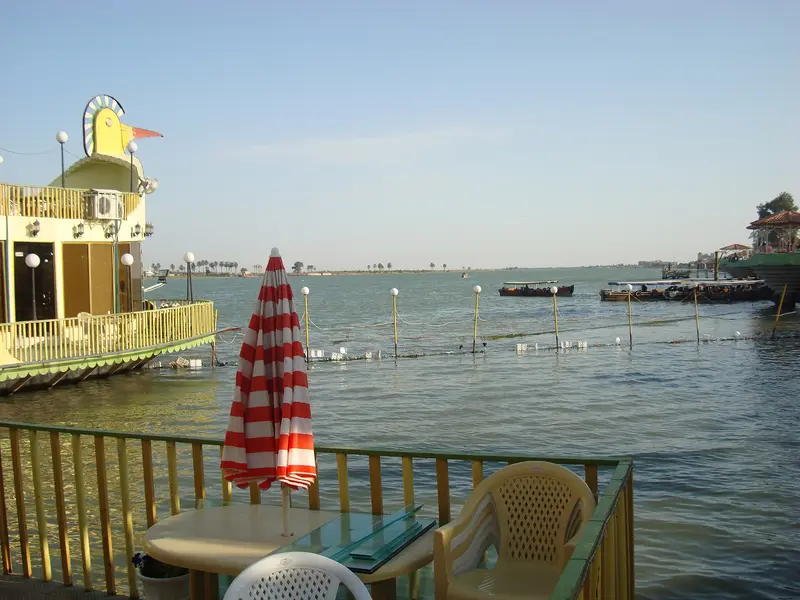
The most common format along the Corniche is the casual fish and grilled-meat restaurant with outdoor seating facing the water. River fish — particularly the local species from the Shatt al-Arab — is a staple. Masgouf (slow-grilled carp) appears on menus throughout, as do kebab platters and rice dishes. Meals at this level are budget to mid-range. Specific prices were not confirmed at publication; check with the restaurant on arrival.
Juice stalls and corn-on-the-cob vendors fill in the gaps between sit-down restaurants. These are cash-only and priced in dinars — exact change is appreciated.
Sit-Down and Riverside Dining
A number of more established restaurants operate along the southern Corniche and in the area around 5th May Park. These have indoor and outdoor seating, printed menus, and in some cases can accommodate larger groups or families in private sections. Some are housed in buildings with direct water frontage; others are set slightly back from the promenade.
Average meal costs were not confirmed in the verified data for this article. Check with the operator on arrival for current pricing.
For help planning where to base yourself near the Corniche, see Where to Stay in Basra.
Best Times to Visit
Timing Around the Heat
Basra in July is hot. The 7-day forecast (as of 21 July 2026) shows highs of 45–48 °C and overnight lows of 33–35 °C. July averages (historical normals) show highs of 46 °C and lows of 30 °C. The Corniche during daylight hours in summer is functionally unpleasant for walking.
The practical window for the Corniche is from around sunset onward. Sunset (Maghrib prayer) on 21 July 2026 falls at 18:50, which gives a useful reference point — the promenade comes alive in the hour before and after. By 20:00–21:00, the full evening crowd is out. Activity continues past midnight on weekends.
In the cooler months — November through March — the Corniche is genuinely pleasant during the day. March highs average 26 °C and December highs around 20 °C, making daytime visits comfortable.
For seasonal packing and weather planning, see Basra Weather & Packing Guide.
Crowds and Days of the Week
Thursday and Friday evenings are the busiest by far (Friday is the main day off in Iraq). Saturday evenings are also busy. If you prefer space and a quieter atmosphere, Sunday through Wednesday evenings are substantially calmer while still having activity.
During Ramadan, the Corniche follows a reversed rhythm: quiet during the day, extremely busy after iftar (sunset meal) and through the night.
Getting There
By Taxi
Taxis are the standard way to get to the Corniche from most parts of the city. Agree on the fare before you get in — meters are not standard. Ride-hailing apps with local operators are available in Basra; check with your accommodation for which app is current.
For a broader overview of moving around the city, see Getting Around Basra.
On Foot
If you are staying in Al-Ashar or the immediate city centre, parts of the Corniche are walkable. The connection between Al-Ashar’s commercial streets and the northern Corniche is straightforward on foot. The full length of the promenade is long, so plan which section you want to focus on rather than trying to walk the entire stretch in one visit.
If you are arriving from the airport, see Basra Airport Arrival Guide for transport options into the city.
FAQ
What should I order at a Corniche café?
Start with black tea — it is the default and comes automatically in most qahwas. Shisha is available at most waterfront cafés. If you want food, grilled fish or kebab are the most common casual options.
Do Corniche restaurants accept cards?
Rarely on the promenade itself. Carry Iraqi dinars in cash. At the current rate of 1,309 IQD per USD (21 July 2026), budget venues are inexpensive in dollar terms.
Can I visit the Corniche during the day in summer?
You can, but July highs of 46–48 °C make it uncomfortable. Most visitors and locals use the promenade after sunset in summer months.
Is the Corniche suitable for families with children?
Yes — 5th May Park in particular is oriented toward families, with children’s rides, vendors, and seating. It is busiest on Thursday and Friday evenings.
How do I get to the Mesopotamian Marshes from the Corniche area?
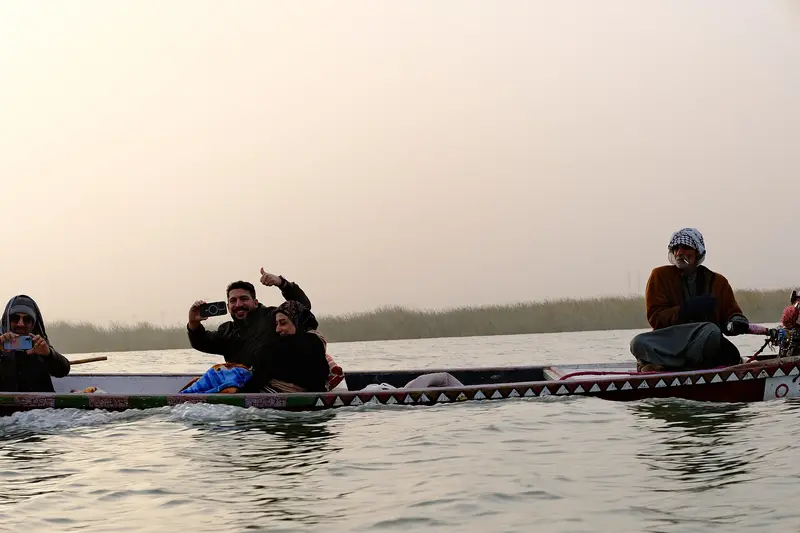
The marshes are accessible as a day trip from Basra. See Mesopotamian Marshes from Basra and Basra Marsh Tour Operators for logistics.