
Basra Weather by Season: What to Pack & When to Visit
Basra sits at the northern tip of the Arabian Gulf and has one of the most extreme climates of any major city on Earth. Summers push daily highs to 46 °C, winters are genuinely mild and pleasant, and spring and autumn bring transitional weather punctuated by sandstorms. Pack for the season you are actually visiting, not the season you imagine Iraq has. This guide lays out what to expect month by month and exactly what to put in your bag.
Summer Heat: June–September
How Hot Does It Actually Get?
Based on long-run climate normals from Open-Meteo, Basra’s average daily highs reach 44 °C in June, 46 °C in both July and August, and 42 °C in September. Overnight lows provide little relief: 28 °C in June, 30 °C in July, 29 °C in August, and 25 °C in September.
The current seven-day forecast (as of 21 July 2026) shows highs between 45.6 °C and 48.4 °C, confirming that real-world peaks can exceed the monthly normal. Rainfall across June, July, August, and September is 0 mm — the city goes months without a single drop.
Humidity rises noticeably close to the Shatt al-Arab waterway and the marshes, making the heat feel more intense than a dry-desert environment. Mid-afternoon outdoor activity is genuinely punishing.
What to Pack for Summer
- Loose, long-sleeved shirts in breathable fabrics — linen or moisture-wicking synthetics. Full sleeve coverage respects conservative dress norms and protects skin from UV radiation simultaneously.
- Lightweight loose trousers — for all genders. Shorts are not widely worn in public spaces.
- A wide-brimmed hat or a keffiyeh-style scarf you can wrap over your head and neck.
- High-SPF sunscreen (50+) in a large tube; supply in local pharmacies can be inconsistent.
- Sunglasses with UV400 protection — the combination of direct sun and reflection off the river is harsh.
- A refillable insulated water bottle — you need to drink before you feel thirsty.
- One light layer for interiors — air conditioning in malls, offices, and some hotels is set extremely cold.
Winter Mild Season: December–February
Why These Are the Best Visiting Months
December, January, and February are Basra’s most comfortable outdoor months. Climate normals show average highs of 20 °C in December, 18 °C in January, and 21 °C in February, with lows dipping to 9 °C in both December and January, and 9 °C in February. These are the rainiest months of the year: 26 mm in December, 32 mm in January, and 22 mm in February — still modest totals by global standards, but enough to produce muddy ground conditions after a shower.
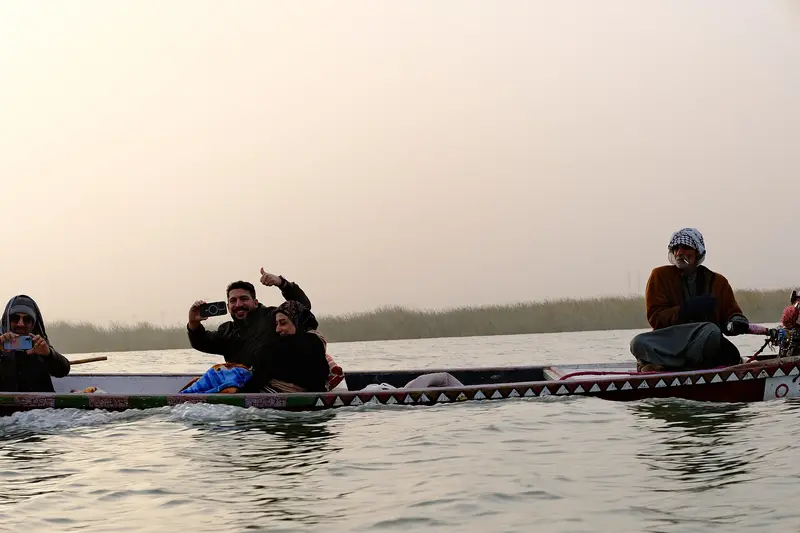
Outdoor sites — including the Mesopotamian Marshes — are far more accessible and enjoyable in this window. Boat trips in the marshes are significantly more comfortable, and walking the city is practical at any hour.
What to Pack for Winter
- A medium-weight jacket or fleece — evenings can feel genuinely cold, especially near the water.
- One warm layer (sweater or merino base layer) for pre-dawn hours; prayer times shift early, with Fajr at 03:27 in mid-July — in winter it falls later, but nights are cool.
- Waterproof shoes or boots — paved surfaces in older districts can become slippery after rain.
- A compact umbrella or a packable rain shell.
- The same conservative clothing base as summer — lighter-weight versions are fine; bare shoulders and legs remain out of place in public settings year-round.
Spring and Autumn: Transitions and Sandstorms
March–May
Spring warms rapidly. March averages a high of 26 °C, April climbs to 33 °C, and May hits 39 °C — all based on Open-Meteo climate normals. Rainfall is modest (18 mm in March, 13 mm in April, 4 mm in May) but fades quickly. This is also prime season for haboob — regional sandstorm events driven by southwesterly winds. A haboob can drop visibility to near zero within minutes, coat everything in fine dust, and last several hours.
October–November
October and November mirror the spring pattern in reverse. Highs of 36 °C in October fall to 26 °C in November, and light rain returns (3 mm and 19 mm respectively). Sandstorm risk persists into October.
What to Pack for Spring and Autumn
- A close-fitting dust mask or a supply of disposable N95 masks — critical if you have any respiratory sensitivity.
- Goggles or tight-fitting sunglasses during dusty periods.
- A tightly sealed bag or dry sack to protect electronics and documents during a sandstorm.
- Layers you can add or remove as temperatures swing dramatically between morning and afternoon.
Packing for Heat, Sun, and Conservative Dress Norms
Regardless of season, Basra is a conservative city. The following rules apply throughout the year:
- Women: Cover shoulders, upper arms, and legs to at least below the knee in all public spaces. A light headscarf is appreciated in religious sites and markets; carry one even if you do not wear it routinely.
- Men: Long trousers are the norm; sleeveless tops are not standard in public areas outside your accommodation.
- Colour: Pale colours reflect heat in summer. Dark colours absorb warmth in winter. Both are practical choices for their respective seasons.
- Footwear: Sandals are practical in summer heat; closed shoes are easier in markets where surfaces vary. Shoes that slip on and off quickly are useful when entering homes or some religious sites.
Health Precautions: Hydration, Sunscreen, and Air Quality
Hydration
In summer, fluid loss through perspiration is severe and fast. Drink water consistently — do not wait until you feel thirsty. Bottled water is widely available. The current exchange rate is 1 USD = 1,309 IQD (ExchangeRate-API), so bottled water is inexpensive at local prices. See money in Basra for cash and payment guidance.
Sun Protection
- Apply SPF 50+ sunscreen 20 minutes before going outdoors and reapply every two hours.
- Avoid direct exposure during the 11:00–15:00 window in summer; the Dhuhr prayer (11:55) and Asr prayer (15:33) provide natural reference points for the midday window — based on timings from the Aladhan API for 21 July 2026.
- UV intensity is high even in winter due to Basra’s southern latitude (30.5° N).
Air Quality and Dust
Sandstorm events can severely degrade air quality. Check local conditions before committing to outdoor plans, particularly in spring and autumn. If you have asthma or other respiratory conditions, carry any required medication in your carry-on; check with your medical provider before travel regarding prescriptions.
Practical Notes Before You Arrive
When you land at Basra International Airport, the temperature difference between the aircraft and the exit can be a physical shock in summer. Have water immediately accessible in your bag. Read the Basra airport arrival guide for logistics on getting from the terminal to your accommodation, and the first 24 hours in Basra guide for orientation. If you are planning accommodation, where to stay in Basra covers options at different price ranges.
For getting around Basra on hot days, enclosed air-conditioned vehicles are far preferable to walking long distances. Ride-sharing apps can reduce time spent waiting outdoors.
FAQ
What is the best month to visit Basra for comfortable weather? January offers the coolest average temperatures — a high of 18 °C and low of 7 °C — with enough rainfall to keep dust down. February and December are equally manageable. These three months consistently give the most comfortable outdoor conditions.
Does Basra get cold enough to need a coat? Yes, briefly. January lows average 7 °C, and wind chill near the river can make it feel colder. A medium fleece or lightweight down jacket is worth packing for December through February evenings.
How bad are the sandstorms? They vary significantly year to year. Major haboob events can halt outdoor activity entirely for hours and are most frequent in April, May, and October. A dust mask and sealed bag for electronics are practical precautions in those months.
Can I wear shorts or a T-shirt in Basra? In private accommodation and some hotel pools, yes. In public streets, markets, and all outdoor sites, long trousers and covered shoulders are the standard expectation for both men and women.
Is it worth visiting the marshes in summer? The Mesopotamian Marshes are accessible year-round, but summer heat on an open boat with no shade during the day is extremely demanding. Winter and early spring give you more comfortable conditions. Check with marsh tour operators for scheduling.
How do I handle the climate if I am arriving by long-distance bus? Buses from other cities typically arrive in the morning or evening. Check the intercity bus and coach guide for schedules. Avoid mid-afternoon arrivals in summer when heat peaks.