
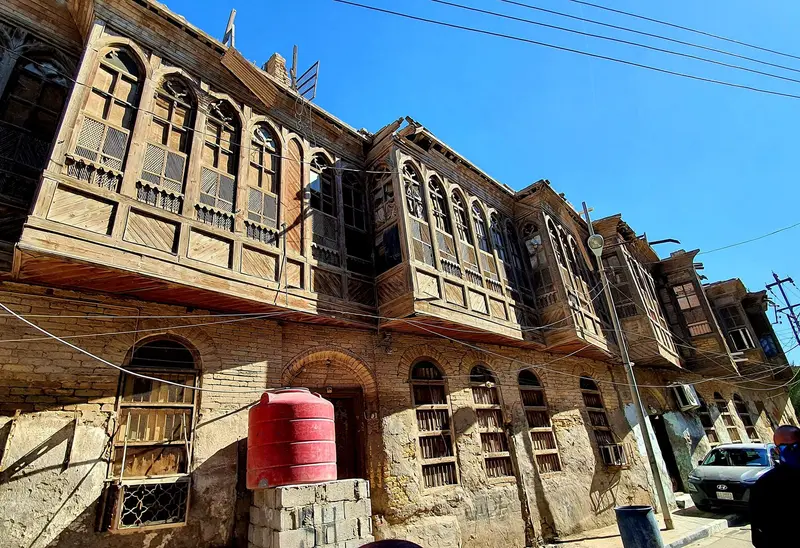
The Corniche: Evening on the Water in Basra
Basra’s Corniche is the city’s main promenade along the Shatt al-Arab waterway — a broad riverside walk where families, couples, and vendors converge each evening once the worst of the heat has passed. If you want to understand the social pulse of the city, this is the place to do it: the lamp-lit river, tea in hand, boats drifting past on the current.
What the Corniche Is
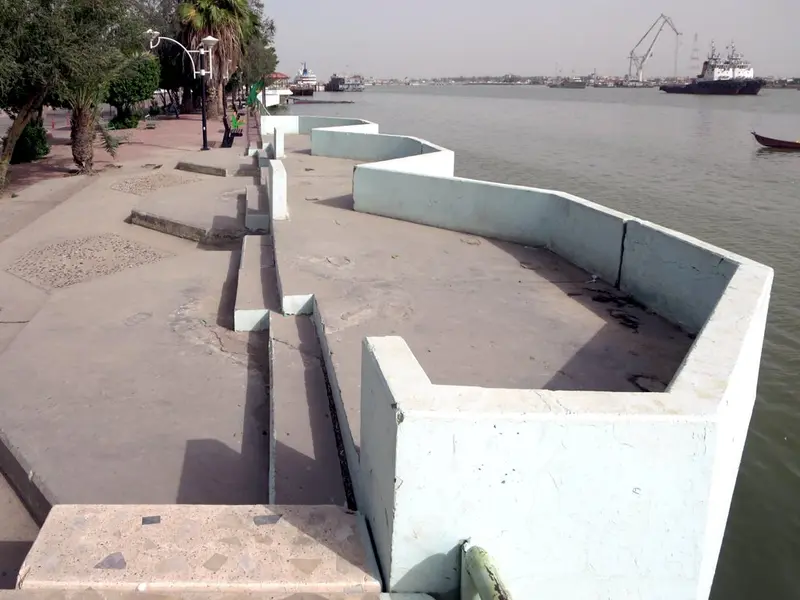
The Corniche stretches along the western bank of the Shatt al-Arab, the river formed by the confluence of the Tigris and Euphrates before it flows south to the Gulf. It is not a single attraction but a linear experience — a paved promenade backed by palm trees, punctuated by cafes and snack carts, with the river always to one side.
The anchor point most visitors use is the statue of Badr Shakir al-Sayyab, Basra’s celebrated 20th-century poet. The bronze figure stands facing the water and is one of the most photographed spots on the riverfront. It serves as a natural meeting point and a useful landmark for telling a driver where to drop you.
The Shatt al-Arab itself is wide here — you can see the far bank clearly — and small passenger and cargo boats move through at intervals. In the early evening the light on the water shifts quickly, and the activity on the promenade picks up accordingly.
When to Go: Timing Around the Heat
There is no single correct hour because Basra’s heat is seasonal and variable. The practical rule is this: check the actual high temperature for the day, then wait until it has clearly dropped toward something tolerable before heading out.
In the summer months (June through August), daytime highs regularly exceed 46 °C according to monthly climate normals — and in mid-July 2026, the forecast shows highs of around 50 °C with lows still above 34 °C overnight. On days like these, the promenade only becomes comfortable well after sunset, and even then the air is warm. Locals generally begin arriving in earnest after Maghrib prayer. Tonight’s Maghrib is at 18:53, and Isha follows at 20:22 — the stretch between those two times is typically when the Corniche starts to fill.
In the winter months (December through February), highs of 18–21 °C mean you can walk the Corniche from late afternoon onward without any discomfort.
The consistent advice: check the day’s forecast on any weather app before you go, and plan to arrive as the sun touches the horizon or just after.
A Walk North from the Sayyab Statue
Start at the Sayyab statue and walk north along the river. This is the direction where the promenade is best developed and most populated in the evenings.
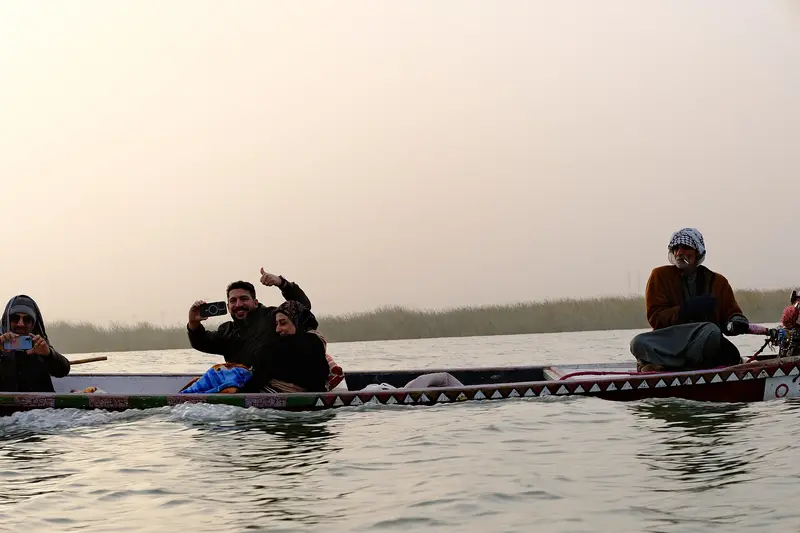
Within the first few minutes you will pass boat berths where small wooden river boats are moored. Some of these offer short trips on the Shatt al-Arab — check with operators directly for availability and pricing on the day, as there is no fixed schedule. Taking a short river trip at dusk, with the city lights beginning to reflect off the water, is one of the more memorable things you can do in Basra.
As you continue north, cafe clusters appear at irregular intervals — some are proper establishments with seating, others are little more than a cart and a few plastic chairs. The variety is part of the experience. You will find tea (chai), cold drinks, and various snacks depending on the vendor.
There are also palm-lined stretches between the busier nodes where you can walk quietly. The promenade is wide enough that crowds rarely feel crushing even on a busy Friday evening.
Corniche Cafes and Tea Spots
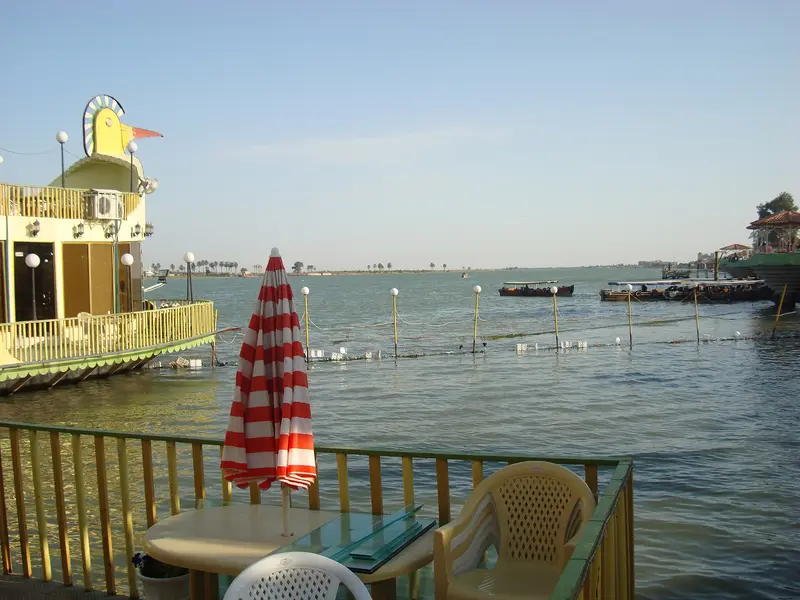
The cafes along the Corniche are casual. Expect plastic or metal furniture set out facing the water, ceiling fans or misters in more established spots, and a menu that centers on tea, coffee, soft drinks, and light snacks such as seeds and sweets.
Payment is cash only across the board. The Iraqi dinar is the currency in use; at time of writing the exchange rate is approximately 1,310 IQD per USD (source: ExchangeRate-API). For specific prices at any cafe, check on the day — they are not standardized, and asking before you order is normal practice. See our money and exchange guide and ATM and exchange rates guide for help managing cash.
There is no strong pressure to spend. Sitting for a while over a single tea is entirely accepted behavior.
Photography: Blue Hour and Etiquette
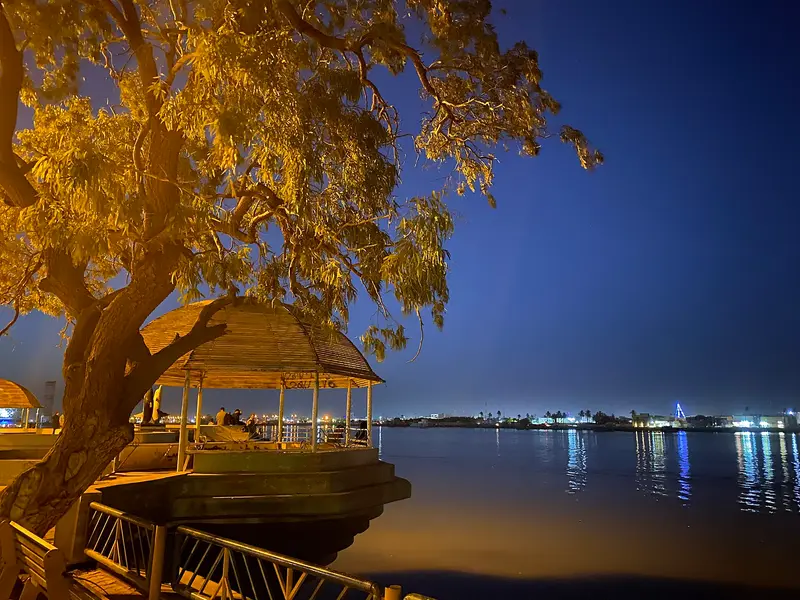
The blue hour — the 20 to 30 minutes after the sun drops below the horizon but before full dark — is the best window for photography on the Corniche. The lamps along the promenade come on around this time, and their reflection on the Shatt al-Arab against a deep blue sky makes for the most visually striking conditions. If you have a camera, be there for this window.
Photographing people: the standard etiquette in Basra is to ask first. This applies particularly to families, women, and children. A brief gesture toward your camera and a questioning look is usually enough — you will get a clear yes or no. Photographing the river, the statue, the boats, and the general landscape is unproblematic.
Getting There and Away
The Corniche is accessible by taxi or ride-hailing app. For a full breakdown of your options, see getting around Basra and the dedicated taxis and apps guide. If you are arriving from the airport, the airport taxi vs ride apps comparison is worth reading first.
Tell your driver the Sayyab statue (تمثال السياب) as your drop-off point — this is universally understood and puts you at the best starting position for a northward walk.
For the return, apps will locate you on the Corniche without difficulty. Alternatively, flag a passing taxi; the road running parallel to the promenade carries regular traffic throughout the evening.
If you have a private driver arranged, the hiring a private driver guide covers how to coordinate pickups in a location like this.
From the Corniche to Dinner
The Corniche walk pairs naturally with dinner on or near the water. Basra is known for masgouf — whole fish grilled over an open fire, a Mesopotamian staple — and several floating restaurants operate on the Shatt al-Arab within reach of the Corniche. Check with your hotel or accommodation for current recommendations, as specific restaurants open and change; see where to stay in Basra for accommodation context.
For your first full evening in the city, the sequence of Corniche walk → river tea → masgouf dinner is a reliable introduction. See the first 24 hours in Basra guide for how to fit this into a broader arrival day.
Practical Notes
Dress modestly. The Corniche is a public, family-oriented space. For men, long trousers and a collared or plain shirt are appropriate. For women, loose clothing covering arms and legs, with a headscarf available, is the practical standard.
Friday evenings are the busiest of the week — Friday is the main day off, and families gather in large numbers from the late afternoon onward. If you want a quieter walk, a weeknight (Sunday through Wednesday) will be calmer.
Families and couples are the dominant demographic in the evenings. The atmosphere is sociable and relaxed. Solo travelers — men or women — are a common enough sight on the promenade and will not draw unusual attention.
Ramadan timing changes the rhythm significantly: the Corniche fills later and more intensely after Iftar, and the energy is festive. If your visit coincides with Ramadan, arriving an hour after sunset is the right call.
Frequently Asked Questions
Do I need to pay an entrance fee to walk the Corniche? No. The promenade is a public space and access is free.
Can I take a boat trip from the Corniche? Small boats are available at the berths along the promenade. Check with the boat operators directly on the day for pricing and trip options — there is no fixed service or published schedule.
Is the Corniche walkable from the city center hotels? It depends on your hotel’s location. Check with your accommodation — some are close enough to walk, others require a short taxi ride. The getting around Basra guide covers the distance context.
What do I do if I want to visit the Mesopotamian Marshes as well? The Corniche and the marshes are entirely different experiences. See the Mesopotamian Marshes from Basra guide for logistics on combining both in a visit.
Are there ATMs near the Corniche? Check locally on arrival; ATM availability changes. See Basra ATM and exchange rates for general cash access guidance, and carry IQD before you head out in the evening.