
Things to do in Basra: the complete list
Basra is Iraq’s southern port city, built along the Shatt al-Arab waterway where the Tigris and Euphrates converge before reaching the Gulf. A first visit realistically covers the Corniche, the historic Ashar district, one or two museums, a riverside meal, and — if you have an extra day — a journey into the Mesopotamian Marshes. This list ranks those experiences and links to the deeper guides that will help you plan each one.
How to orient yourself
Basra is not a compact old town you can walk in an afternoon. It is a sprawling city made up of distinct neighbourhoods: Ashar (the historic commercial and canal district), Corniche (the river-facing promenade), Margil, Bradhiya, and outlying areas that stretch toward Basra International Airport to the north. Most visitor experiences sit in the Ashar–Corniche corridor, which is manageable without a car. For the Marshes you will need a day, a driver, and an early start.
For currency, the working rate is roughly 1 USD = 1,310 IQD (sourced from ExchangeRate-API, 13 July 2026). Check money in Basra and ATMs and exchange rates before you go.
When to visit: July normals reach highs around 46 °C (Open-Meteo climate data). The current forecast through 19 July shows daily highs between 49.6 °C and 50.9 °C — outdoor sightseeing should be done before 9 am or after 5 pm. October through April offers far more comfortable conditions, with January highs around 18 °C and occasional rain. Plan outdoor activities accordingly.
Prayer times today (13 July 2026, Muslim World League method): Fajr 03:20 · Sunrise 04:56 · Dhuhr 11:55 · Asr 15:32 · Maghrib 18:53 · Isha 20:22 (Aladhan API). Many shops and some sites close briefly at each prayer; factor this into your timing.
The experiences, ranked
1. An evening on the Corniche
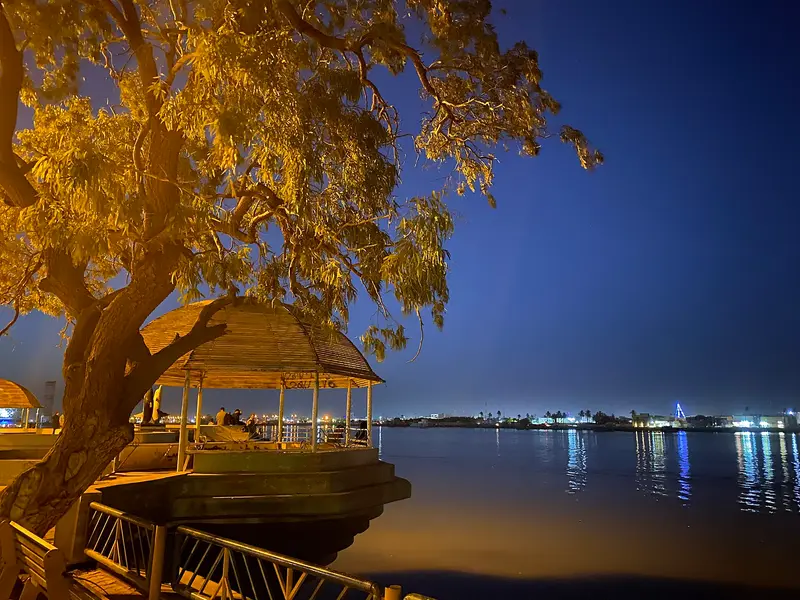
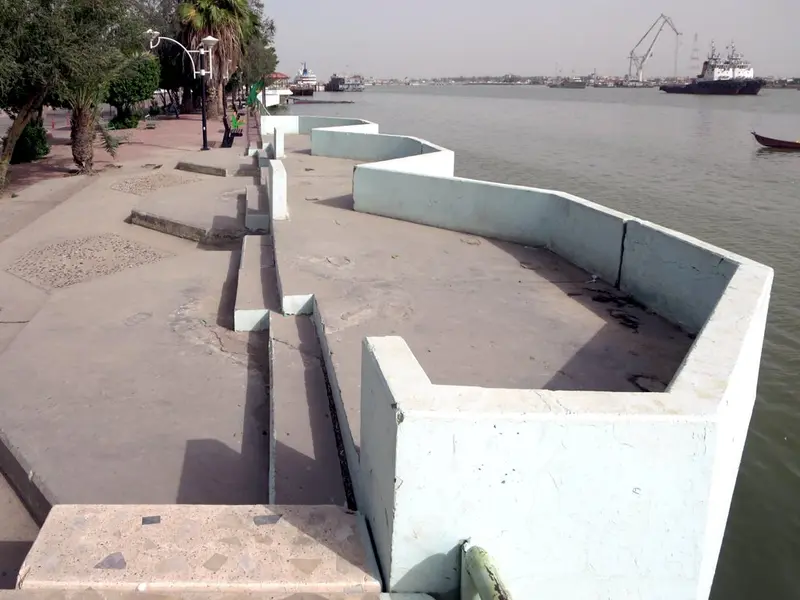
The Corniche — the riverside promenade running along the Shatt al-Arab — is the single experience most associated with Basra. Families, vendors, and riverside cafés fill it from late afternoon into the night. The light on the water around sunset (Maghrib today at 18:53) is the backdrop that defines most visitors’ memories of the city.
Best time: Two hours before sunset through mid-evening.
Practical note: Check hours and any current access conditions with local contacts or your accommodation.
→ See the full Corniche guide for walking the route, café stops, and boat ride options.
2. Eat masgouf on the water — and at Ashar grills
Masgouf — whole carp split, spiced, and slow-grilled over tamarind wood — is Iraq’s national dish, and Basra’s waterfront restaurants are a primary place to eat it. Several establishments in Ashar also serve it from open grills on the street. A mid-range meal is accessible for most budgets; confirm current prices directly with the restaurant.
Best time: Lunch or early evening, when fish is freshest and grills are active.
Common mistake: Arriving after 9 pm — many grill spots wind down by then.
→ See the Basra food guide and the Ashar grill guide for specific locations.
3. Old Basra and the shanasheel heritage lanes
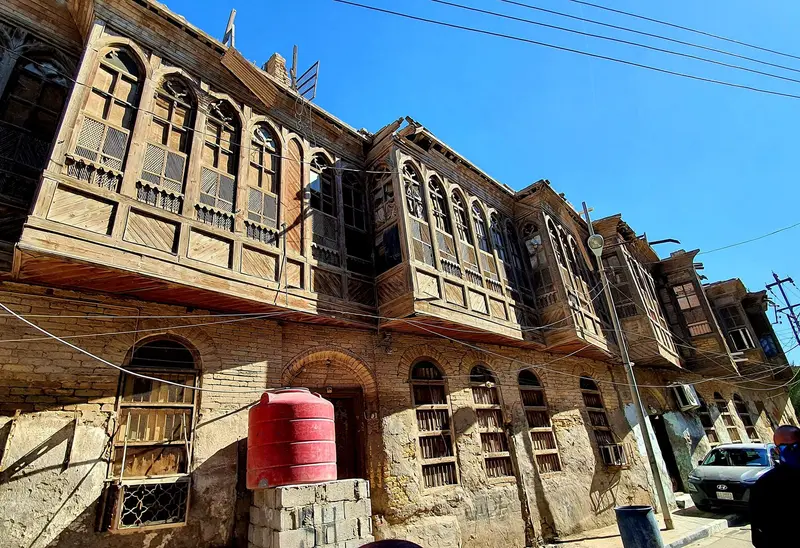
The shanasheel — elaborately carved wooden bay windows projecting over narrow lanes — are Basra’s most distinctive architectural feature. The best-preserved examples sit in the older residential quarters of Ashar and the surrounding heritage streets. Walking these lanes in the cooler morning hours gives you a sense of the city’s Ottoman-era mercantile past without crowds.
Best time: Early morning, before 9 am in summer.
Practical note: Many buildings are private residences; photograph from the street and be respectful of residents.
→ The shanasheel and Old Basra guide maps the key streets.
4. Basra Museum (the former royal palace)
Basra’s main museum is housed in a former palace and holds artefacts spanning Mesopotamian, Sumerian, and more recent Iraqi history. It is one of the few climate-controlled indoor experiences in the city, which makes it particularly worthwhile in summer.
Best time: Any time during opening hours — check current hours and admission fees with the museum directly or via your accommodation, as these change.
Common mistake: Visiting on a Monday — many Iraqi public institutions are closed.
5. Ashar souks and canals
Ashar is Basra’s commercial heart, and its covered souks sell everything from spices and textiles to electronics. The narrow canals threading through the district are a quieter and more photogenic side of the neighbourhood. The gold souk and the spice market are the most visited sections.
Best time: Mid-morning, when traders are set up but the day’s heat has not yet peaked. In summer, wrap up by 11 am.
Practical note: The canals are best seen from street level or from a small hired boat; check with local operators for current boat-hire availability and pricing.
→ See getting around Basra for how to reach Ashar from the city centre or airport.
6. Day trip to the Mesopotamian Marshes
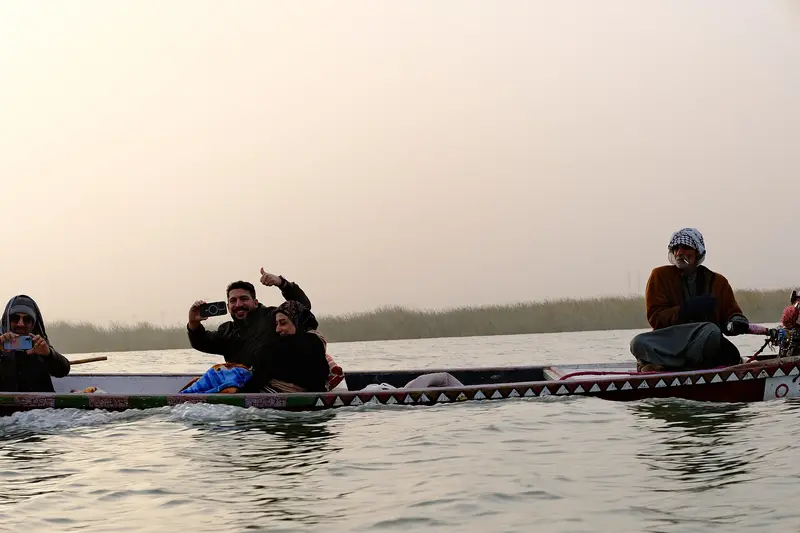
The Mesopotamian Marshes — a UNESCO World Heritage landscape — begin roughly an hour’s drive from central Basra. The Ma’dan (Marsh Arabs) still live and fish in this vast wetland; a guided boat trip into the interior, passing reed islands and water buffalo, is unlike anything else in Iraq.
This is a full-day commitment. You will need a private driver or an organised tour, an early start, and water and sun protection. Check with your driver or a local tour operator for current access points, boat hire pricing, and any conditions affecting the route.
Best time: November through March for mild temperatures and migratory birds. Summer visits are possible but demanding.
Common mistake: Booking a half-day. The drive alone is two hours round-trip; allow at least six hours total.
→ Full planning details at Mesopotamian Marshes from Basra. For hiring a driver, see hiring a private driver in Basra.
7. Sinbad Island and family-friendly river outings
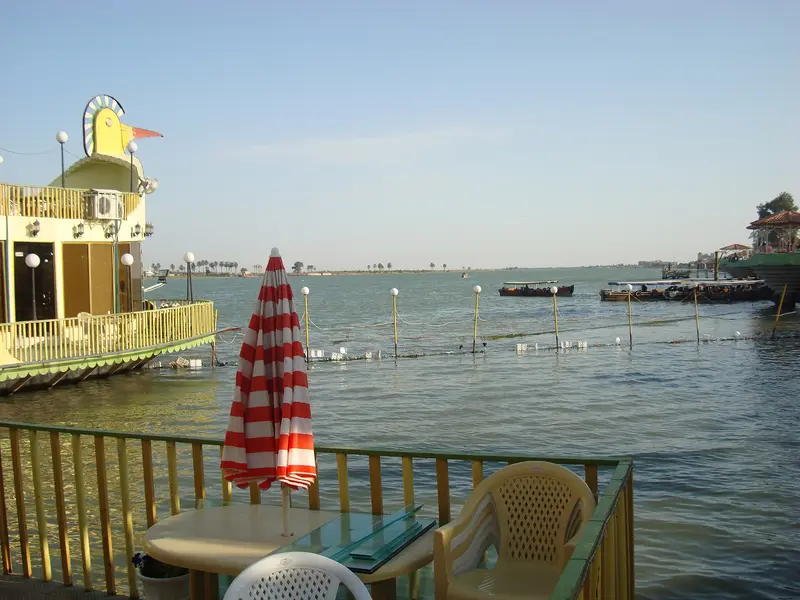
Sinbad Island, sitting in the Shatt al-Arab, is a local leisure destination with waterfront walks, cafés, and facilities aimed at families. It is accessible by a short boat crossing and offers a different perspective on the river than the Corniche. Facilities and operating hours change seasonally; check with the operator before visiting.
Best time: Late afternoon through evening.
Practical note: It is busiest on Thursday evenings and Fridays (the Iraqi weekend).
Practical logistics
| Topic | Where to read |
|---|---|
| Arriving at Basra Airport | Airport arrival guide |
| First day planning | First 24 hours in Basra |
| Getting between sites | Getting around Basra |
| Taxis and ride apps | Taxis and apps |
| Airport transfers | Airport taxi vs ride apps |
| Where to sleep | Where to stay in Basra |
FAQ
How many days do you need in Basra?
Two full days covers the Corniche, Ashar, masgouf, the museum, and shanasheel walking. Add a third day for a Marshes trip. Anything beyond three days suits visitors with specific interests — birding, photography, or deeper heritage exploration.
Is the Corniche walkable, or do you need transport?
The Corniche itself is walkable once you are there, but Basra is a large city and you will likely need a taxi or ride app to reach it from most accommodation. See getting around Basra.
What currency should I carry?
Iraqi dinar (IQD) is required for almost all transactions. The current rate is approximately 1,310 IQD per USD (ExchangeRate-API, 13 July 2026). See money in Basra for how and where to exchange.
Can I visit the Marshes without a guide?
The road to the access points is straightforward, but navigating the waterways requires a local boat operator. Most visitors hire a driver for the overland leg and arrange a boat on arrival at the launch point. See Mesopotamian Marshes from Basra for step-by-step logistics.
When do sites close?
Iraq’s official weekend is Friday–Saturday. Government museums and heritage sites commonly close on Fridays and Mondays. Check directly with each site before visiting — hours are not always published reliably online.