
One Day in Chibayish: an hour-by-hour marshes itinerary
A single day is enough to reach Chibayish from Basra, take a two-to-three-hour mashoof ride through the reed beds and open lagoons, eat lunch in the marshes, and return before dark — provided you leave well before sunrise. This article is the hour-by-hour companion to the main Mesopotamian Marshes guide. Read that first for background on the marshes ecosystem; come back here when you need a working schedule.
Is one day enough — or should you stay overnight?
A day trip suits you if you have a fixed onward schedule, if marsh accommodation is already fully booked, or if you simply want a first look before committing to more time. It does not suit you if you want to photograph the marshes at golden hour, watch a sunrise over the water, or spend an evening inside a mudhif. For those experiences, an overnight stay in or near Chibayish is the right call.
One practical ceiling: July daytime highs in Basra regularly reach 47–51 °C according to current forecasts, and the marshes offer limited shade once you are on open water. A day trip in summer means compressing your on-water time into the cooler morning hours — which is exactly what the schedule below does.
Pre-dawn: why the early start is not optional
The heat is the scheduling constraint around which everything else fits. On the water by 07:00–07:30 means departing Basra by 05:00–05:30 at the latest. That is not a suggestion; on summer days it is the margin that separates a comfortable boat ride from an exercise in endurance.
Before you leave:
- Eat before you depart. Chibayish town has small shops and tea stalls, but you will spend the key hours on the water, not browsing for breakfast. A meal from your hotel or a 24-hour bakery in Basra is the practical option.
- Fajr prayer is at 03:23 and sunrise at 04:57 (Basra, current date). Your driver will likely plan around these; confirm the exact pick-up time the evening before.
- Carry more water than you think you need — at least two litres per person for the boat portion alone.
- Cash in Iraqi dinars is essential. The current indicative rate is approximately 1,310 IQD per USD. ATMs in Chibayish are not reliable; draw cash in Basra before you leave. See money in Basra and Basra ATM and exchange rates for specifics.
Getting your driver: Book a private driver the day before rather than searching at dawn. The guide to hiring a private driver in Basra covers how to find a vetted option and what to negotiate in advance. Confirm that the driver knows the Chibayish waterfront — specifically the Martyrs Monument area where boatmen typically gather — not just the town generally.
05:00 – Departure from Basra
Meet your driver at the agreed point. The road to Chibayish runs roughly northwest from Basra through flat agricultural land. Travel time varies with traffic and road conditions; check with your driver for a current estimate. The landscape shifts from urban sprawl to date palm groves to the first signs of marsh water as you approach.
Use the road leg to confirm the day’s plan with your driver: does he know a specific boatman, or will you approach the waterfront and negotiate on arrival? Having an introduction in advance is preferable — ask your hotel or the driver to make a call the evening before.
07:00 – Arriving at the Chibayish waterfront
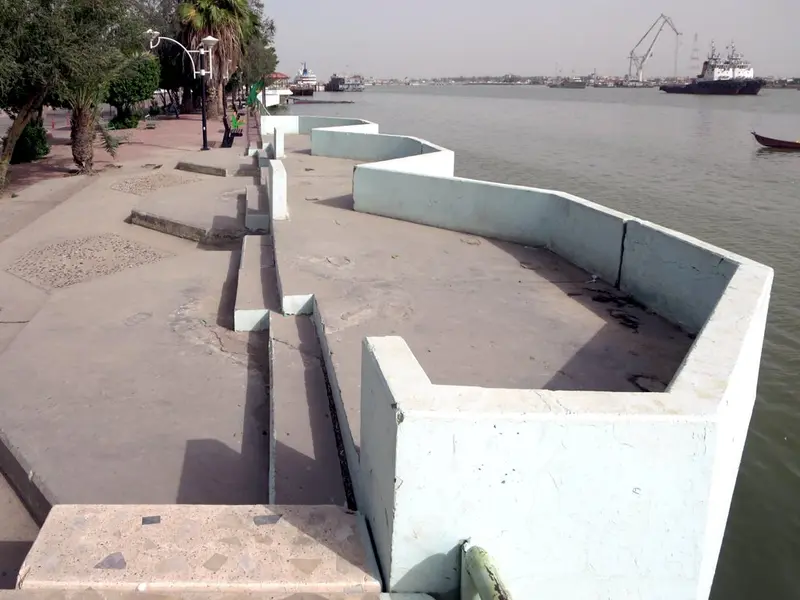
The area around the Martyrs Monument on the Chibayish riverfront is where mashoof operators congregate. You will see the traditional narrow wooden boats moored or being readied. Approach boatmen here, or meet the contact your driver has arranged.
Before you step into any boat, confirm:
- The planned route and approximate duration (two to three hours is typical, but water levels vary by season and year — the boatman will know what is actually navigable on the day).
- Whether lunch in a reed house is included, and the total price for the trip. Do not assume lunch is included; ask directly and agree on a number in IQD before departure.
- How many passengers the quoted price covers.
Do not pay the full amount upfront; a deposit is standard, with the balance on return.
07:30 – On the water: the mashoof route
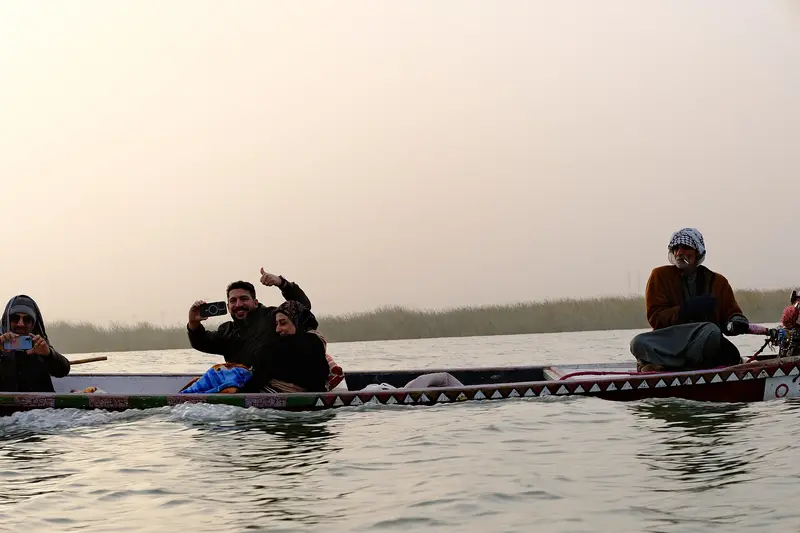
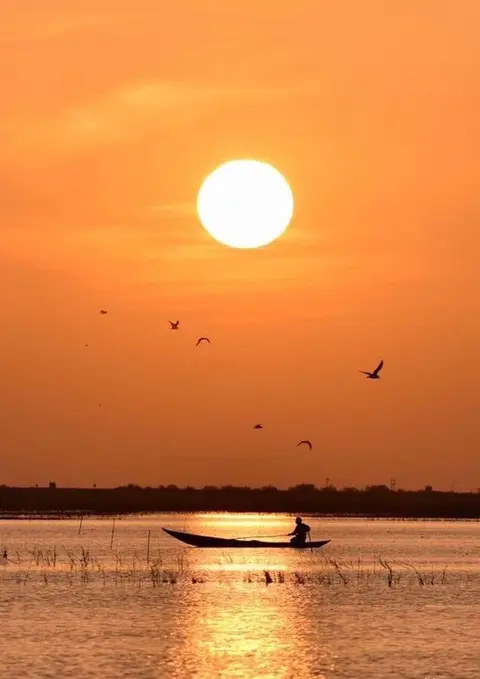
Once on the water, the boatman poles or motors through a sequence of environments. A typical route moves from the narrow reed-lined channels near the waterfront out toward more open lagoons, passing buffalo platforms (raised mud-and-reed structures where water buffalo rest), and sometimes stopping near a floating reed house.
What you will see:
- Reed corridors where the sky closes to a strip above you and the only sounds are water and birds.
- Water buffalo — large herds are common; the animals are calm around boats but keep a respectful distance.
- Marsh Arabs (Ma’dan) going about daily routines: fishing, tending buffalo, transporting goods by boat.
- Open lagoons where the reeds fall away and you can see the flat horizon in every direction.
What you cannot predict: Water levels fluctuate significantly depending on upstream flows and seasonal rainfall. A route that was passable in spring may be shallow or closed in late summer. The boatman will adjust on the day. Ask him to explain the route when you board; experienced operators will show you roughly where they plan to go.
Bring a hat with a full brim, not just a cap. Polarised sunglasses help considerably on open water. Sunscreen should be reapplied on the boat.
10:00 – Lunch in a reed house
If lunch was agreed as part of your arrangement, the boatman will bring the boat alongside a reed house — either one belonging to a family he knows or a platform set up for visitors. Meals typically consist of freshwater fish (often grilled), rice, flatbread, and tea. Do not expect a menu; the meal is what is available that day.
If lunch was not included in your negotiated price, do not assume it will appear and do not put the host family in an awkward position by expecting hospitality that was not arranged. Confirm with the operator beforehand.
After lunch, allow time for tea and a rest before the return leg. This midday pause also keeps you off the open water during the hottest hour.
12:30 – Beginning the return to Chibayish
Aim to be back at the Chibayish waterfront by 13:00–13:30. This gives you buffer time before the road leg back. Spend a few minutes at the waterfront if you want to photograph the boats or buy water before the drive.
Optional detours — confirm locally: There are other sites in the broader Chibayish area — archaeological remains, additional waterways, village markets. None of these should be added to your schedule without confirming access, timing, and cost with your driver and boatman on the day. Do not build a fixed timeline around any optional stop; treat them as possible, not planned.
13:30 – Road back to Basra
Depart no later than 14:00. The drive back is the same route; budget the same travel time as the morning leg. Arriving in Basra before dark gives you flexibility if there are delays. Road conditions and checkpoints can extend travel time unpredictably — this buffer is not optional padding.
What can go wrong, and how to handle it
| Problem | Likely cause | What to do |
|---|---|---|
| No boatman available | High demand, boatman committed elsewhere | Ask your driver to call ahead the evening before |
| Very shallow water | Low seasonal flow | Accept a shorter or modified route; this is normal and not the boatman’s fault |
| Extreme heat mid-morning | July/August conditions | Shorten on-water time; rest in shade at lunch |
| Vehicle issue on road | Road conditions | This is why you leave buffer time on return |
| Price disagreement at end | Not agreed upfront | Agree everything in writing or witness before departure |
The single most effective mitigation for all of these is a phone call the evening before: confirm the boatman, confirm the plan, confirm the price.
FAQ
How far is Chibayish from Basra? Check with your driver for current road conditions and time estimates, as these vary.
Do I need to book the boat in advance? You can negotiate on arrival at the waterfront, but having an introduction through your driver or hotel reduces uncertainty, especially in peak season or on weekends.
Is the mashoof ride suitable for children? The boats are stable in calm water but there are no railings and no life jackets as standard. Discuss your group’s specific needs with the boatman before booking.
What currency do I need? Iraqi dinars (IQD). The current indicative exchange rate is approximately 1,310 IQD per 1 USD. Carry enough cash from Basra; do not rely on finding an ATM in Chibayish. See money in Basra.
Can I do this trip without a private driver? Shared transport options exist but are less predictable for an early start and a return on your own schedule. A private driver is strongly recommended for a day trip. See hiring a private driver in Basra and getting around Basra.